

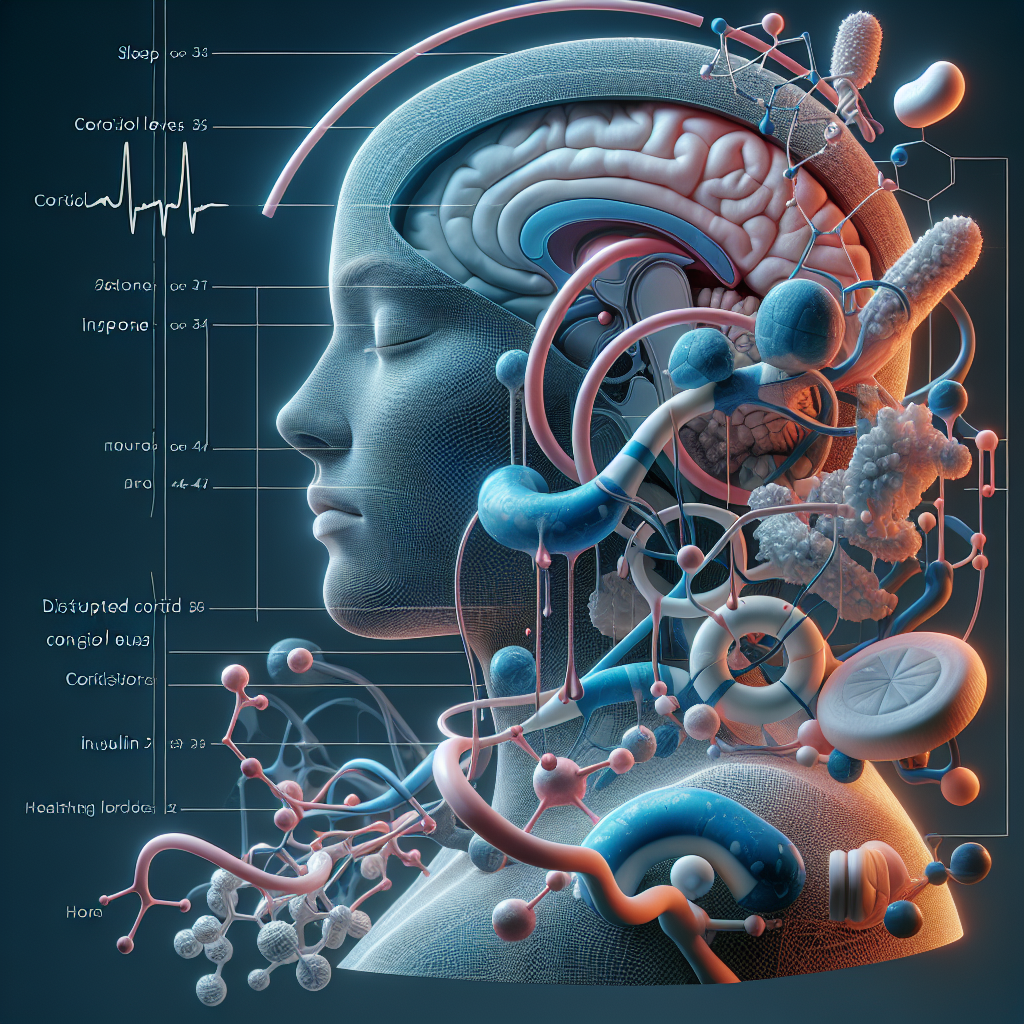
Sleep loss does not stay in the brain
Poor sleep changes hormone signaling long before someone notices obvious fatigue. Even one or two nights of short, fragmented, or irregular sleep can shift cortisol timing, reduce insulin sensitivity, alter appetite hormones, and weaken the nightly melatonin rise that helps regulate the body clock. The result is not just feeling tired. It is a biological state where the endocrine system starts making less precise decisions.
This is why sleep problems often show up alongside stubborn weight changes, increased cravings, irregular cycles, lower stress tolerance, afternoon energy crashes, and a wired-but-tired feeling at night. The common mistake is to treat each symptom as separate when the deeper pattern is often disrupted sleep architecture and circadian timing.
How poor sleep changes the hormone system
1. Cortisol loses its normal rhythm
Cortisol is not simply a “stress hormone.” It is a time-of-day hormone. In a healthy rhythm, cortisol rises in the early morning to support alertness and gradually falls toward night. Poor sleep can flatten or shift this curve. When bedtime is inconsistent, sleep is shortened, or sleep is repeatedly interrupted, cortisol may remain elevated later into the evening or surge at the wrong times.
That matters because elevated nighttime cortisol works against sleep initiation and reduces the depth of restorative sleep. This creates a loop: poor sleep raises cortisol, and abnormal cortisol timing makes the next night worse. Over time, this can contribute to feeling alert when you want to sleep and exhausted when you need to perform.
2. Insulin becomes less efficient
Sleep restriction reduces how well cells respond to insulin. In plain language, the body needs a stronger insulin signal to handle the same amount of glucose. This is one reason people often notice stronger cravings for refined carbohydrates after a poor night.
Mechanistically, sleep loss increases sympathetic nervous system activity, raises inflammatory signaling, and shifts cortisol in ways that interfere with glucose regulation. The pancreas can compensate for a while, but the body is working harder. This helps explain why chronic poor sleep and metabolic dysfunction are so closely linked.
If someone is trying to understand whether sleep disruption may be affecting blood sugar patterns, a structured metabolic snapshot can help. The sleep score tool is a practical starting point for identifying whether perceived rest matches likely sleep quality and consistency.
3. Melatonin is more than a sleep signal
Melatonin is often discussed as a sleep hormone, but its real role is broader. It communicates darkness to the body and helps coordinate circadian timing across tissues. When people stay under bright light late at night, work irregular shifts, scroll in bed, or sleep at inconsistent times, melatonin release may be delayed or reduced.
That affects more than sleep onset. Melatonin interacts with reproductive hormones, metabolic timing, body temperature regulation, and cellular repair processes that are synchronized to the light-dark cycle. When melatonin signaling is weak, the whole hormonal orchestra can drift out of time.
4. Ghrelin and leptin start pushing appetite in the wrong direction
Poor sleep changes appetite regulation in a predictable way. Ghrelin, which stimulates hunger, tends to rise, while leptin, which helps signal fullness and energy sufficiency, can fall. This does not simply increase appetite in a general sense. It often increases reward-driven eating, especially for calorie-dense foods.
That is why someone may feel surprisingly hungry after a bad night even if their activity level did not change. It is not just a lack of willpower. The body is receiving altered endocrine signals that make food, especially quick-energy food, seem more necessary and more rewarding.
Why hormone symptoms often get blamed on the wrong cause
Many people assume their symptoms begin with estrogen, progesterone, testosterone, or thyroid changes alone. Those hormones do matter, but poor sleep can distort the context in which those hormones operate. A person may think they have a primary hormone issue when what they are partly seeing is the effect of chronic circadian disruption on the hypothalamic-pituitary-adrenal axis, glucose handling, and appetite regulation.
For example, low stress resilience, heavier PMS symptoms, reduced exercise recovery, more intense evening cravings, and morning brain fog can all be amplified by inadequate sleep. Sleep is not the only factor, but it is often the hidden amplifier that makes ordinary hormonal fluctuations feel much worse.
The reproductive hormone connection
In women
Sleep disruption can influence cycle regularity, PMS intensity, and perceived hormonal volatility through several pathways. Cortisol competes for physiological priority during stress, and chronic sleep debt raises that stress load. Poor circadian signaling may also affect gonadotropin release patterns, which help regulate ovarian hormone production.
Clinically, this can show up as more noticeable premenstrual symptoms, less predictable energy through the cycle, and stronger sensitivity to stress. It does not mean sleep loss directly causes a hormone disorder, but it can worsen the expression of an existing imbalance.
In men
Sleep is important for testosterone regulation, recovery, body composition, and sexual health. Short sleep and fragmented sleep can reduce the normal overnight environment that supports hormone renewal. Men may notice lower motivation, impaired recovery from training, changes in libido, and reduced resilience to stress when sleep quality deteriorates.
Again, the issue is not only total sleep time. Late bedtimes, frequent waking, sleep apnea risk, alcohol-related sleep fragmentation, and high evening stimulation all matter.
Why stress management alone often fails
A common wellness message is to “manage stress better.” The problem is that poor sleep itself is a biological stressor. If someone is under-slept, their nervous system becomes more reactive, their glucose control worsens, and their cortisol rhythm becomes less stable. In that state, stress-reduction techniques may help, but they rarely solve the full problem unless sleep timing and sleep depth improve too.
This is why people can meditate, eat relatively well, and still feel hormonally off. Without enough consistent, high-quality sleep, the endocrine system remains in a compensatory mode.
Practical ways to reduce sleep-driven hormone disruption
Protect timing before optimizing supplements
The first intervention is not always a product. It is consistency. Going to bed and waking at roughly the same time anchors cortisol and melatonin rhythms. For many people, the body responds better to stable timing than to chasing perfect sleep hygiene in a random schedule.
- Keep wake time consistent, even after a poor night.
- Dim light for 1 to 2 hours before bed to support melatonin release.
- Avoid heavy meals and alcohol late at night, which fragment sleep and worsen glucose control.
- Get morning daylight exposure to strengthen circadian signaling.
- Reduce stimulating work close to bedtime, especially emotionally charged or screen-heavy tasks.
Use supportive tools strategically, not randomly
When stress, rumination, and evening overstimulation are major barriers, some people look for targeted support around relaxation and sleep readiness. In those cases, products built around calming compounds may fit into a broader routine, not replace it. For example, a formula such as mood and sleep support capsules may be relevant for adults looking to support a calmer evening transition, while an environmental cue like a bedtime aromatherapy room spray can help reinforce a consistent pre-sleep ritual.
The important distinction is behavioral context. A sleep-support product used alongside bright light exposure at midnight, irregular meals, and constant schedule shifts will likely underperform. Hormone-friendly sleep starts with circadian alignment, and supportive products work best when they reinforce that pattern.
Real-world signs your sleep may be driving hormone symptoms
People often miss the sleep-hormone connection because they are technically spending enough time in bed. The more useful question is whether sleep is deep, regular, and synchronized with the body clock.
- You feel tired but wired at night
- You wake at 2 to 4 a.m. and struggle to fall back asleep
- You rely on sugar or caffeine after poor sleep
- Your cravings intensify after short nights
- Your cycle symptoms or stress sensitivity worsen during periods of poor sleep
- You feel unrefreshed despite “sleeping enough”
These patterns do not diagnose a hormone disorder, but they strongly suggest that sleep quality deserves attention before assuming the problem is only nutritional, reproductive, or motivational.
When the issue may be more than routine sleep debt
If someone snores heavily, wakes choking, has major daytime sleepiness, experiences persistent insomnia, or notices significant mood changes, it is worth getting a clinical evaluation. Sleep apnea, circadian rhythm disorders, medication effects, depression, anxiety, perimenopause, and thyroid issues can all overlap with poor sleep and hormone symptoms.
Educational content can clarify mechanisms, but persistent sleep disruption deserves individualized assessment. Hormones are responsive, but they are also context-dependent. If the context includes untreated sleep pathology, the endocrine system will continue to struggle.
The core takeaway
Poor sleep worsens hormone balance because it disrupts timing, not just rest. It shifts cortisol, weakens insulin sensitivity, alters melatonin signaling, and pushes appetite hormones toward higher intake and lower satiety. Over time, this can make hormonal symptoms feel stronger, recovery feel slower, and daily energy feel less predictable.
The practical lesson is simple: if hormone symptoms seem to be getting worse, sleep should not be treated as a side issue. In many cases, it is the mechanism that links stress, cravings, fatigue, and circadian dysfunction into one repeating loop.


