
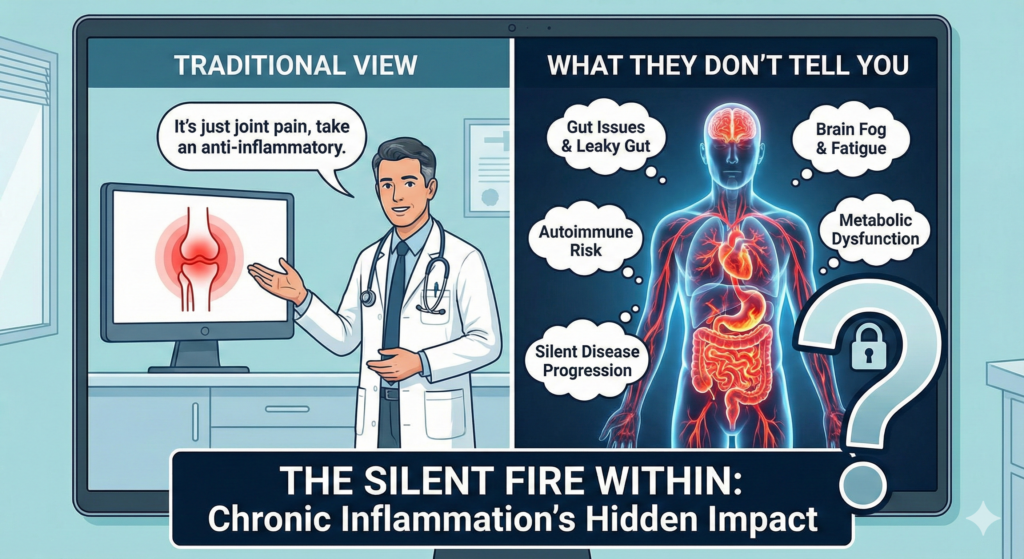

Chronic inflammation is one of the most important — and least understood — drivers of modern disease. Unlike acute inflammation (which helps you heal from injury or infection), chronic low-grade inflammation can silently damage tissues for years.
It is strongly linked to heart disease, insulin resistance, fatty liver, autoimmune conditions, neurodegeneration, and even depression.
Acute vs. Chronic Inflammation
Acute Inflammation (Helpful)
- Triggered by injury or infection
- Short-term
- Redness, swelling, heat
- Part of normal immune response
Chronic Inflammation (Problematic)
- Low-grade and persistent
- Often symptom-free at first
- Driven by metabolic stress, visceral fat, poor diet, smoking, and inactivity
- Gradually damages blood vessels and organs
The danger is not dramatic symptoms — it’s the slow accumulation of damage.
How Chronic Inflammation Affects the Body
- Arteries: Promotes plaque formation and instability
- Liver: Contributes to fatty liver
- Brain: Linked to cognitive decline and mood disorders
- Metabolism: Worsens insulin resistance
- Joints: Can worsen stiffness and pain
Hidden Drivers of Chronic Inflammation
1) Visceral Fat
Abdominal fat tissue actively releases inflammatory cytokines. Even moderate central obesity increases inflammatory signaling.
2) Refined Carbohydrates and Ultra-Processed Foods
Highly processed foods can promote blood sugar spikes and metabolic stress, which contribute to inflammatory pathways.
3) Sedentary Lifestyle
Lack of movement reduces anti-inflammatory signaling that normally occurs with regular exercise.
4) Poor Sleep
Even short-term sleep deprivation increases inflammatory markers such as CRP.
5) Chronic Stress
Persistent stress elevates cortisol and sympathetic activity, which can influence immune function and inflammation.
6) Smoking and Environmental Toxins
Smoking is one of the strongest pro-inflammatory exposures.
How Is Chronic Inflammation Measured?
- hs-CRP (high-sensitivity C-reactive protein)
- Elevated triglycerides
- Low HDL cholesterol
- Elevated fasting insulin
hs-CRP is commonly used in cardiovascular risk assessment.
What Doctors Often Don’t Emphasize
1) It’s Often Reversible
Inflammation is dynamic. With targeted lifestyle changes, markers can improve within weeks to months.
2) It’s Closely Linked to Insulin Resistance
Metabolic dysfunction and inflammation reinforce each other in a cycle.
3) Medication Alone May Not Address Root Causes
While anti-inflammatory drugs can reduce symptoms, long-term improvement requires addressing underlying drivers.
How to Reduce Chronic Inflammation Naturally
1) Follow a Mediterranean-Style Diet
- Extra virgin olive oil
- Fatty fish
- Vegetables and fruits
- Nuts and seeds
- Legumes
2) Increase Omega-3 Intake
Omega-3 fatty acids support anti-inflammatory pathways and improve triglyceride levels.
3) Lose Visceral Fat
Even 5–10% weight loss can significantly reduce inflammatory markers.
4) Strength Train + Walk Daily
Exercise produces anti-inflammatory signaling molecules (myokines).
5) Prioritize Sleep
7–8 hours per night supports immune balance.
6) Consider Targeted Supplements
| Supplement | Potential Role |
|---|---|
| Omega-3 (EPA/DHA) | Supports anti-inflammatory balance |
| Curcumin | Modulates inflammatory pathways |
| Magnesium | Supports metabolic and inflammatory balance |
| Vitamin D | Supports immune regulation (if deficient) |
Supplements work best when combined with foundational lifestyle improvements.
How Fast Can Inflammation Improve?
- 2–4 weeks: measurable improvements in energy and glucose stability
- 8–12 weeks: potential reductions in hs-CRP and triglycerides
FAQ
Can chronic inflammation exist without symptoms?
Yes. Many individuals have elevated inflammatory markers without noticeable symptoms.
Is inflammation always bad?
No. Acute inflammation is necessary for healing. Chronic uncontrolled inflammation is the problem.
Does sugar cause inflammation?
Excess refined sugar can contribute to metabolic stress and inflammatory signaling, especially when combined with inactivity.
Can exercise increase inflammation?
Intense exercise temporarily increases inflammation, but regular training lowers chronic baseline inflammation.
Should I test CRP?
If you have metabolic risk factors or a family history of cardiovascular disease, discussing hs-CRP testing with your healthcare provider may be reasonable.