
Omega-3 fatty acids are among the most researched nutrients for cardiovascular, metabolic, and brain health. But not all fish oil supplements are equal. Oxidation, low EPA/DHA content, poor purification, and misleading labels are common problems.
If you want real benefits, quality matters — and one of the most important indicators is something called TOTOX.
Why Omega-3 Matters
The two most important marine omega-3 fatty acids are:
- EPA (Eicosapentaenoic Acid) – supports cardiovascular and inflammatory balance
- DHA (Docosahexaenoic Acid) – critical for brain and nervous system health
Potential benefits of adequate omega-3 intake:
- Lower triglycerides
- Improved lipid profile balance
- Reduced systemic inflammation
- Support for brain health
- Support for insulin sensitivity
The Problem: Oxidized Fish Oil
Omega-3 fats are highly unstable. Heat, light, and oxygen can damage them, leading to oxidation. Oxidized fish oil may:
- Lose potency
- Cause digestive discomfort
- Produce a strong fishy smell or burping
This is where TOTOX becomes critical.
What Is TOTOX?
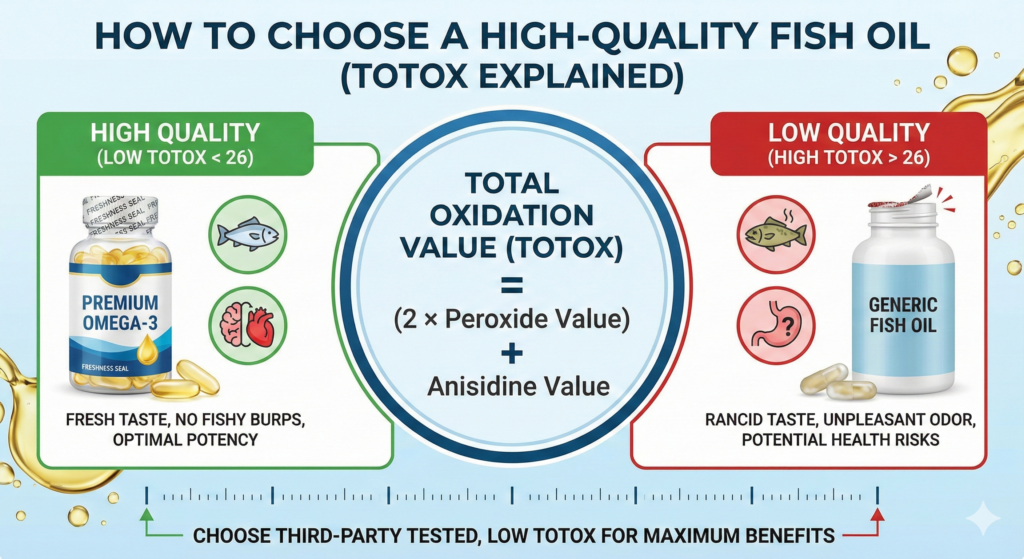
TOTOX stands for Total Oxidation Value. It is a measurement that combines two markers:
- Peroxide value (PV) – measures early oxidation
- Anisidine value (AV) – measures secondary oxidation
TOTOX formula:
TOTOX = (2 × Peroxide Value) + Anisidine Value
What Is a Good TOTOX Score?
- Excellent quality: TOTOX below 10
- Acceptable quality: below 20–26 (industry upper limit)
- Poor quality: above recommended thresholds
The lower the TOTOX score, the fresher and more stable the oil.
How to Read a Fish Oil Label Correctly
1) Look at EPA + DHA Content (Not Just “Fish Oil” Amount)
A capsule may contain 1000 mg of fish oil but only 300 mg of EPA+DHA combined. The therapeutic dose depends on actual EPA+DHA content.
- General health: ~1 g EPA+DHA daily
- High triglycerides: 2–4 g EPA+DHA daily (medical supervision advised)
2) Check the Form
- Triglyceride form (TG or rTG) – often better absorbed
- Ethyl ester (EE) – common, less expensive form
Re-esterified triglyceride (rTG) forms are often marketed as premium options.
3) Look for Purity Testing
High-quality fish oils should be tested for:
- Heavy metals (mercury, lead)
- PCBs and dioxins
- Oxidation markers (including TOTOX)
Third-party testing increases reliability.
4) Check Storage Recommendations
- Store away from heat and light
- Refrigerate after opening (for liquids)
- Avoid products with strong fishy odor
5) Smell Test
Fresh fish oil should have minimal odor. A strong rancid smell is a warning sign.
Fish Oil vs. Krill Oil
| Feature | Fish Oil | Krill Oil |
|---|---|---|
| EPA/DHA Content | Higher concentration possible | Typically lower per capsule |
| Form | TG / rTG / EE | Phospholipid-bound |
| Cost | More cost-effective | Usually more expensive |
Both can be effective, but dose and quality matter more than marketing claims.
Common Mistakes When Buying Omega-3
- Choosing the cheapest option without testing transparency
- Ignoring EPA+DHA dosage
- Not checking oxidation data
- Expecting benefits from very low doses
Who Benefits Most from Omega-3?
- Individuals with elevated triglycerides
- People with low fish intake
- Those with high inflammatory markers
- Individuals with metabolic syndrome
How Long Until You See Results?
- 4–8 weeks: measurable triglyceride improvement
- 8–12 weeks: more stable lipid and inflammatory markers
Safety Considerations
- Higher doses may increase bleeding risk in susceptible individuals
- Consult a doctor if taking anticoagulant medication
- Start with moderate doses and adjust based on labs
FAQ
Is TOTOX always listed on labels?
No. Many brands do not disclose TOTOX publicly. Companies that provide oxidation testing are generally more transparent.
Can oxidized fish oil be harmful?
Highly oxidized oil may lose effectiveness and could contribute to digestive discomfort. Freshness is important for both safety and efficacy.
Should I take omega-3 with food?
Yes. Taking omega-3 with a fat-containing meal improves absorption and reduces the risk of fishy burps.
Is more always better?
No. Dose should match your health goal. Very high doses should be used under medical supervision.
Can I get enough omega-3 from diet alone?
If you eat fatty fish 2–3 times per week, supplementation may not be necessary. Many people, however, fall short of optimal intake.