
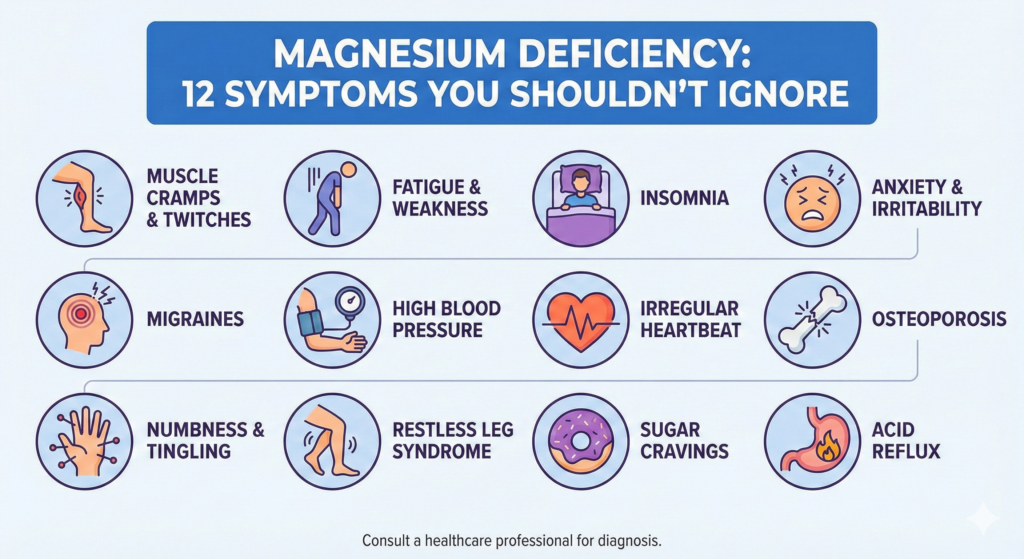

Magnesium is involved in more than 300 enzymatic reactions in the human body. It supports muscle and nerve function, blood pressure regulation, glucose metabolism, sleep quality, and energy production. Yet modern diets, chronic stress, and certain medications make magnesium deficiency surprisingly common.
Because symptoms can be subtle at first, magnesium deficiency is often overlooked for years.
Why Magnesium Matters
- Supports normal muscle contraction and relaxation
- Helps regulate heart rhythm
- Plays a key role in insulin sensitivity
- Supports healthy blood pressure
- Contributes to energy (ATP) production
- Supports nervous system balance and sleep
Even mild deficiency may contribute to chronic symptoms many people consider “normal.”
12 Symptoms of Magnesium Deficiency
1) Muscle Cramps or Twitching
One of the classic early signs. Magnesium helps muscles relax after contraction. Low levels can cause cramping, eyelid twitching, or restless legs.
2) Chronic Fatigue
Magnesium is essential for ATP production. Low levels may contribute to persistent low energy.
3) Poor Sleep Quality
Magnesium supports GABA activity, helping calm the nervous system. Deficiency may lead to difficulty falling or staying asleep.
4) Anxiety or Increased Stress Sensitivity
Magnesium helps regulate the stress response. Low levels may increase nervous system excitability.
5) High Blood Pressure
Magnesium supports vascular relaxation. Low intake has been associated with elevated blood pressure in some individuals.
6) Frequent Headaches or Migraines
Magnesium deficiency is commonly observed in people with migraines, and supplementation may reduce frequency in some cases.
7) Insulin Resistance
Magnesium plays a role in insulin signaling. Low magnesium status may worsen glucose control.
8) Irregular Heart Rhythm
Severe deficiency can affect cardiac rhythm. Persistent palpitations should always be medically evaluated.
9) Numbness or Tingling
Low magnesium may affect nerve signaling and contribute to abnormal sensations.
10) Weakness or Reduced Exercise Performance
Magnesium supports muscle function and oxygen utilization.
11) Constipation
Magnesium helps relax intestinal muscles. Certain forms (like magnesium citrate) are sometimes used for this purpose.
12) Increased PMS Symptoms
Magnesium may help reduce fluid retention, mood swings, and cramping in some individuals.
Who Is at Higher Risk?
- People under chronic stress
- Those consuming highly processed diets
- Individuals with high alcohol intake
- People with insulin resistance or type 2 diabetes
- Users of certain medications (e.g., proton pump inhibitors, some diuretics)
- Older adults
Best Food Sources of Magnesium
- Dark leafy greens (spinach, Swiss chard)
- Pumpkin seeds
- Almonds and cashews
- Dark chocolate (high cocoa content)
- Legumes (black beans, lentils)
- Whole grains
How Much Magnesium Do You Need?
- Adult men: ~400–420 mg/day
- Adult women: ~310–320 mg/day
Needs may increase during periods of stress, heavy exercise, or metabolic dysfunction.
Which Form of Magnesium Is Best?
| Form | Best For |
|---|---|
| Magnesium glycinate | Sleep, relaxation, anxiety support |
| Magnesium citrate | Constipation support |
| Magnesium threonate | Cognitive support (emerging research) |
| Magnesium malate | Energy and muscle support |
Magnesium oxide is common but less bioavailable compared to the forms above.
How Fast Can You Feel a Difference?
- Days to 1–2 weeks: improved sleep or muscle relaxation
- 4–8 weeks: improvements in blood pressure or metabolic markers (in some individuals)
Safety Considerations
- Start with moderate doses (e.g., 200–400 mg/day)
- Higher doses may cause loose stools
- People with kidney disease should consult a doctor before supplementing
FAQ
Can you test magnesium levels accurately?
Standard serum magnesium tests may not reflect total body magnesium status perfectly. If symptoms are present, clinical context matters.
Is it safe to take magnesium daily?
For most healthy individuals, moderate daily supplementation is considered safe. Adjust dose based on tolerance.
Can magnesium help with anxiety?
Some individuals report reduced stress and improved relaxation, particularly with magnesium glycinate.
Does magnesium lower blood pressure?
In some people, especially those deficient, magnesium may contribute to modest reductions in blood pressure.
Should I take magnesium at night?
Many people prefer evening dosing due to its relaxing effects, but timing can be individualized.