

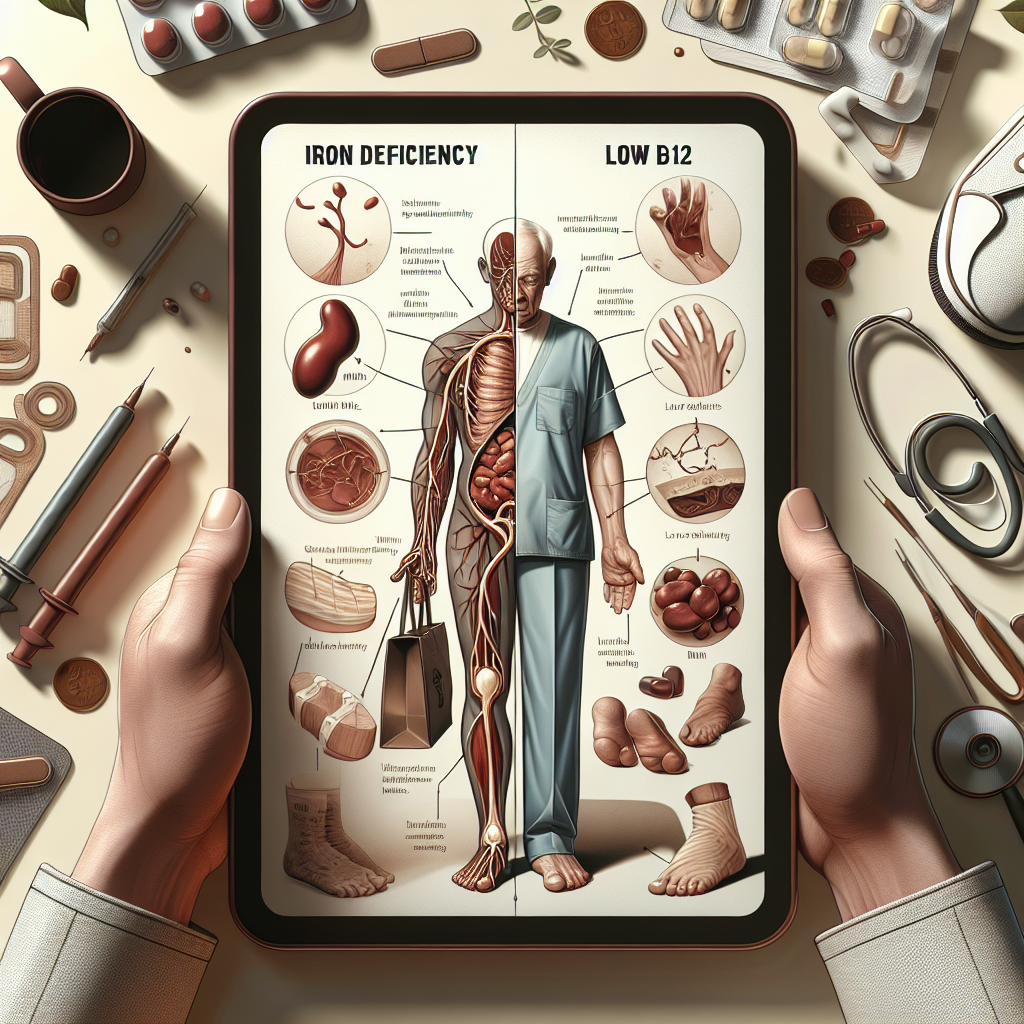
Iron deficiency vs low B12 is a diagnostic mix-up that happens for a reason
Fatigue, weakness, shortness of breath, poor concentration, dizziness, and pale skin can appear in both iron deficiency and low vitamin B12 status. That overlap is exactly why people often assume they have “low iron” when the real issue is B12, or start taking B12 when iron depletion is the more likely driver. The problem is not just symptom similarity. It is that both nutrients are tied to red blood cell function, oxygen delivery, and neurological performance, but they fail through different biological mechanisms.
Iron deficiency primarily disrupts hemoglobin production. Hemoglobin is the oxygen-carrying protein inside red blood cells, and iron is central to its structure. If iron availability drops, the body cannot build hemoglobin efficiently, oxygen transport declines, and tissues feel it quickly.
Low B12 works differently. Vitamin B12 is essential for DNA synthesis and normal nerve function. When B12 is insufficient, cells in the bone marrow cannot divide properly, which impairs red blood cell production. At the same time, the nervous system may be affected through methylation-related pathways and myelin maintenance. That is why low B12 can look like anemia but also produce neurological symptoms that iron deficiency usually does not.
The clinical takeaway is simple: similar tiredness does not mean the same root cause.
The mechanism difference: oxygen transport vs cell division and nerve integrity
What happens in iron deficiency
Iron is required for hemoglobin synthesis, myoglobin function, and several enzymes involved in energy production. In iron deficiency, red blood cells tend to become smaller and carry less hemoglobin. This pattern is often described as microcytic, hypochromic anemia, although iron depletion can exist before anemia develops.
That “pre-anemia” stage matters. Ferritin, a marker related to iron stores, may fall before hemoglobin becomes abnormal. People can experience reduced exercise tolerance, hair shedding, restless legs, and brain fog even when a standard blood count still looks close to normal.
What happens in low B12
B12 is needed for DNA synthesis, especially in rapidly dividing cells such as those in bone marrow. When B12 is low, red blood cell precursors cannot mature normally. The cells often become larger than expected, a pattern known as macrocytosis. But the red-cell picture is only part of the story. B12 is also involved in homocysteine metabolism and neurological health. This is why numbness, tingling, balance changes, memory issues, mood changes, or a sore tongue may point more strongly toward B12 insufficiency than toward iron deficiency.
In real-world practice, this difference is important because some people focus only on energy symptoms and miss the neurological clues.
Symptoms that overlap and symptoms that help separate them
Common to both
- Persistent fatigue
- Reduced stamina
- Weakness
- Shortness of breath on exertion
- Dizziness or lightheadedness
- Headaches
- Brain fog
- Pale appearance
More suggestive of iron deficiency
- Craving ice or non-food substances
- Hair shedding or brittle nails
- Restless legs
- Cold intolerance
- Symptoms linked to heavy menstrual blood loss
- Reduced endurance with exercise
More suggestive of low B12
- Numbness or tingling in hands and feet
- Balance problems
- Memory changes
- Low mood or irritability
- Smooth or sore tongue
- Nerve-related burning, pins-and-needles, or gait changes
These patterns are not absolute. A person can have both deficiencies at the same time, which makes the symptom picture less clear and can distort lab interpretation.
The common mistake: treating “low energy” without identifying why iron or B12 is low
The biggest mistake is self-prescribing based on fatigue alone. Iron deficiency often reflects a cause, not just a nutrient gap. Heavy periods, blood loss from the digestive tract, low iron intake, endurance training, pregnancy, reduced stomach acid, celiac disease, inflammatory bowel disease, or long-term use of acid-suppressing medication can all play a role.
Low B12 also has common underlying drivers. These include low intake in poorly planned vegan diets, reduced intrinsic factor, autoimmune pernicious anemia, chronic gastritis, metformin use, gastrointestinal surgery, and malabsorption disorders.
If a person repeatedly becomes iron deficient, the real question is not only “How much iron should I take?” but also “Why are my stores dropping?” The same logic applies to B12.
Why lab interpretation matters more than symptom guessing
Symptoms can suggest a direction, but laboratory assessment usually clarifies the picture. Iron deficiency is commonly assessed with markers such as ferritin, hemoglobin, transferrin saturation, serum iron, and total iron-binding capacity. Low B12 evaluation may include serum B12, methylmalonic acid, homocysteine, and a complete blood count.
One complication is that ferritin is also an acute-phase reactant. It can rise with inflammation, infection, or liver stress, which may mask low iron stores. Another issue is that serum B12 alone may not always reflect functional sufficiency.
Mixed deficiency can confuse the classic red blood cell pattern. Iron deficiency tends to push cells smaller, while B12 deficiency tends to push them larger. When both exist, mean cell volume may look deceptively normal. That is one reason broad interpretation beats focusing on a single number.
If fatigue is occurring alongside metabolic issues such as weight changes or insulin resistance, broader health context may matter too. In some cases, tools such as the HOMA-IR calculator can help frame whether blood sugar regulation may also be contributing to low energy, although it does not replace nutrient assessment.
Absorption differences: why supplementation does not always solve the problem
Iron absorption is highly regulated
Iron absorption mainly occurs in the small intestine and is influenced by stomach acid, dietary composition, and hepcidin, a hormone that regulates iron traffic. High hepcidin can reduce iron absorption, which means inflammation, infection, and frequent high-dose dosing strategies may backfire in some people.
Practical factors also matter. Tea, coffee, calcium, and some high-phytate foods can reduce absorption when taken too close to iron. Vitamin C can enhance non-heme iron uptake. For people who need an iron supplement, form and tolerability matter because side effects often reduce adherence. A well-absorbed option such as gentle bisglycinate iron supplement may be easier for some individuals during short-term repletion, but dosage and duration should align with clinical guidance.
B12 absorption depends on a different system
B12 first has to be released from food proteins in the stomach, then bind to intrinsic factor, and finally be absorbed in the terminal ileum. Problems anywhere along that chain can reduce status. That is why someone eating enough animal foods can still become deficient. It also explains why B12 deficiency is relatively common in people with digestive disorders, low stomach acid, autoimmune conditions, or a history of gastric surgery.
The contrast is useful: iron problems often revolve around intake, blood loss, hepcidin regulation, and intestinal absorption, while B12 problems often involve intrinsic factor, stomach function, and ileal uptake.
Who is more likely to develop iron deficiency vs low B12?
Higher likelihood of iron deficiency
- Women with heavy menstrual bleeding
- Pregnant individuals
- Frequent blood donors
- Endurance athletes
- People with low red meat intake or restrictive diets
- People with celiac disease, inflammatory bowel disease, or chronic gastrointestinal blood loss
Higher likelihood of low B12
- Older adults
- Vegans without structured B12 intake
- People taking metformin long term
- People using proton pump inhibitors or other acid-suppressing drugs for long periods
- Those with pernicious anemia or autoimmune gastritis
- People after bariatric or gastrointestinal surgery
What to do if you suspect one of these deficiencies
Start with pattern recognition, but do not stop there. Fatigue with hair shedding and heavy periods suggests one path. Fatigue with numbness and balance changes suggests another. But because overlap is common, testing is usually the most efficient next step.
Useful practical steps include:
- Review dietary intake honestly, especially iron-rich foods and reliable B12 sources
- Consider medication effects, especially metformin and acid-suppressing drugs
- Look for blood loss patterns, including menstrual and gastrointestinal clues
- Ask whether digestive symptoms suggest malabsorption
- Use follow-up testing to confirm whether repletion is working
If iron intake is inadequate or a clinician has recommended short-term support, some people prefer liquid formats for ease of use, especially when swallowing capsules is difficult. In that setting, a liquid iron with vitamin C may fit a practical routine. The important point is not to use supplements as a substitute for investigating the reason deficiency developed.
When the distinction matters most
The iron deficiency vs low B12 question matters most when someone has persistent symptoms despite “normal” basic labs, partial improvement from the wrong supplement, or a risk profile that points toward malabsorption. It also matters when neurological symptoms are present, because they should not be dismissed as simple tiredness.
In practice, the most useful mindset is not choosing the most popular deficiency online. It is matching the symptom pattern, mechanism, risk factors, and lab context. Iron and B12 can both affect energy, but they do so through different biological bottlenecks. One limits hemoglobin production and oxygen delivery. The other disrupts cell division and can impair nerve health.
That difference is what turns a vague fatigue complaint into a more targeted conversation.
Bottom line
Iron deficiency and low B12 can look similar on the surface, but they are not interchangeable. Iron deficiency is more closely tied to hemoglobin production, oxygen transport, blood loss, and iron regulation. Low B12 is more closely tied to DNA synthesis, red blood cell maturation, neurological function, and intrinsic-factor-dependent absorption.
If symptoms overlap, guessing is less useful than assessing the mechanism. That is where better questions, more complete lab interpretation, and attention to absorption often make the difference.


