

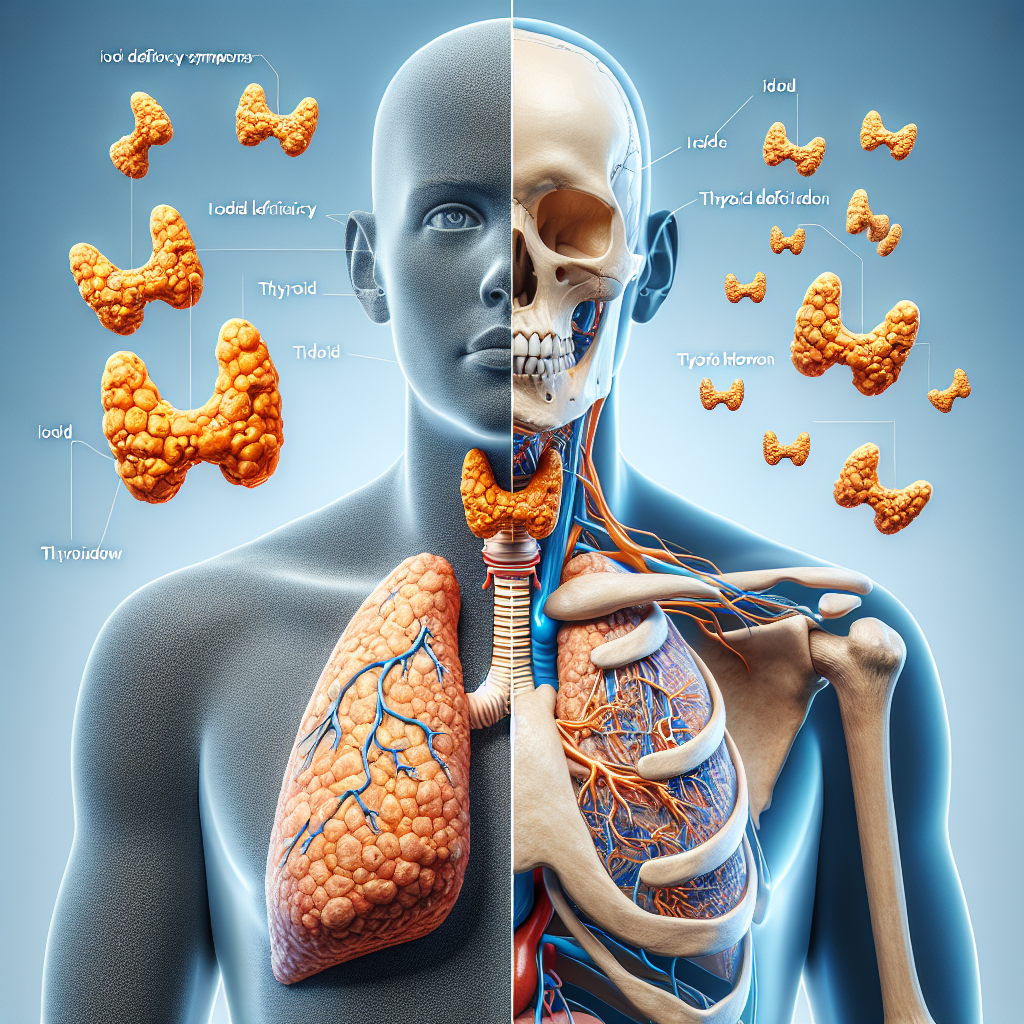
Iodine deficiency and thyroid slowdown are not the same problem
Fatigue, feeling cold, dry skin, constipation, brain fog, hair thinning, and low mood are often grouped under a vague label of “slow thyroid.” But this symptom cluster can come from different biological pathways, and one of the most commonly misunderstood is iodine deficiency. The distinction matters because iodine deficiency is a nutrient problem, while thyroid slowdown can reflect a broader endocrine issue that may or may not be caused by low iodine.
Iodine is the raw material the thyroid needs to build hormones. The thyroid combines iodine with the amino acid tyrosine to produce thyroxine (T4) and triiodothyronine (T3). Without enough iodine, the gland may struggle to maintain output. But not every low-thyroid pattern is caused by inadequate iodine intake. Autoimmune thyroid disease, medication effects, postpartum shifts, calorie restriction, chronic illness, and altered conversion of T4 to T3 can all create a picture that looks similar from the outside.
This is why people often make a practical mistake: they assume that symptoms alone prove iodine deficiency and start supplementing aggressively. In reality, the more useful question is not “Do I feel hypothyroid?” but “Is my thyroid underperforming because it lacks iodine, or is something else affecting thyroid regulation?”
The mechanism: how iodine actually affects thyroid hormone production
The thyroid gland actively pulls iodine from the bloodstream through the sodium-iodide symporter. Once inside the thyroid, iodine is oxidized and attached to tyrosine residues on thyroglobulin, forming mono- and diiodotyrosine. These are then coupled to create T3 and T4. This process is tightly regulated by thyroid-stimulating hormone (TSH), which rises when the brain senses that thyroid hormone output is not meeting demand.
When iodine intake is too low over time, the thyroid may compensate by working harder under higher TSH stimulation. In some cases, the gland enlarges, producing a goiter. That enlargement is not random; it is an adaptive attempt to capture more iodine and preserve hormone production. Early on, the body may maintain normal thyroid hormone levels despite low intake. Later, if deficiency persists, production can become insufficient.
This is where symptom confusion begins. A person with low iodine may develop a true production problem. But a person with autoimmune thyroiditis can have reduced hormone output even with adequate iodine intake. Another person may have normal T4 production but poor peripheral conversion into T3 during stress, illness, or underfeeding. The symptom list overlaps, but the physiology differs.
Why the symptoms overlap so much
Thyroid hormones influence metabolic rate, thermoregulation, gut motility, lipid handling, menstrual function, and neurocognitive performance. When tissues are exposed to lower thyroid signaling, many body systems slow down at once. That is why different causes can feel nearly identical in day-to-day life.
- Fatigue: reduced cellular energy turnover
- Cold intolerance: lower heat production
- Constipation: slower intestinal transit
- Dry skin and hair changes: altered skin turnover and follicle cycling
- Brain fog: slower neurologic and cognitive processing
- Weight changes: often modest, but related to lower metabolic activity and fluid shifts
These signs can occur with iodine deficiency, primary hypothyroidism, subclinical thyroid dysfunction, and sometimes even chronic stress or under-eating. Symptoms are therefore clues, not conclusions.
The most common real-world mistake: treating “thyroid symptoms” with iodine without context
Iodine has a narrow practical window: too little can impair hormone synthesis, but more is not automatically better. In susceptible people, high iodine intake can aggravate thyroid dysfunction rather than correct it. That is especially relevant when the underlying issue is autoimmune thyroid disease rather than true deficiency.
For example, someone who avoids dairy, seafood, and iodized salt may indeed have a lower iodine intake and benefit from correcting that gap. But someone with Hashimoto’s thyroiditis who already consumes adequate iodine may not benefit from adding high-dose kelp or multiple iodine-containing products. The same symptom pattern can point in opposite directions depending on the underlying mechanism.
That is the key comparison: iodine deficiency is about inadequate substrate; thyroid slowdown is about impaired thyroid function, which may involve immune attack, pituitary signaling, conversion dynamics, or gland damage. Confusing the two can delay the right evaluation.
Who is more likely to have iodine deficiency?
Iodine deficiency is less common in regions with iodized salt programs, but it still appears in specific dietary patterns and life stages. Risk is higher in people who:
- avoid iodized salt entirely
- eat little or no seafood
- avoid dairy and eggs
- follow vegan diets without planned iodine sources
- are pregnant, when iodine requirements rise
- consume restrictive diets focused on “clean eating” but low in mineral diversity
Vegan and plant-based eaters are a particularly important group to assess carefully. Plant foods are not reliable iodine sources unless grown in iodine-rich environments or fortified. Seaweed can provide iodine, but its content is highly variable, making intake inconsistent. For people who want a measured daily amount rather than unpredictable swings, an option such as a vegan multinutrient with moderate iodine may be easier to integrate than relying on sea vegetables alone.
What thyroid slowdown can mean when iodine is not the problem
When people say “my thyroid is slow,” they often mean one of several different patterns:
1. Primary hypothyroidism
The thyroid gland itself is not producing enough hormone. Autoimmune thyroiditis is a common reason. Iodine deficiency is one possible cause, but far from the only one.
2. Subclinical hypothyroidism
TSH is elevated, but circulating thyroid hormone remains within range. This may reflect early thyroid stress, and symptoms may or may not be present.
3. Impaired conversion or altered signaling
The body may produce T4, but tissue-level activation into T3 may be reduced during illness, severe stress, energy deficiency, or inflammation. This is not the same as iodine deficiency because the raw material may be sufficient while downstream regulation is altered.
4. Central causes
Less commonly, pituitary or hypothalamic signaling problems reduce thyroid stimulation. Again, iodine intake may be normal.
These distinctions explain why a single supplement strategy does not fit every case.
Nutrients that change the iodine conversation
Iodine does not work in isolation. Several nutrients affect how the thyroid uses iodine and how safely hormone production proceeds.
Selenium
Selenium is required for deiodinase enzymes that help convert T4 into T3, and for antioxidant systems that protect thyroid tissue during hormone synthesis. The thyroid naturally generates hydrogen peroxide as part of hormone production, so oxidative balance matters. If iodine intake rises without adequate selenium, the gland may face more oxidative stress. That does not mean selenium “cancels out” iodine deficiency, but it does mean thyroid nutrition is not one-dimensional.
Iron
Iron is needed for thyroid peroxidase activity. Low iron status can blunt thyroid hormone synthesis even when iodine is present.
Zinc and tyrosine
Zinc participates in hormone metabolism and signaling, while tyrosine provides the amino acid backbone for thyroid hormone production.
This is one reason a balanced formula may make more sense than isolated self-treatment in some people with broad dietary gaps. A product such as a comprehensive multivitamin that includes iodine and supportive cofactors may be more practical than layering separate products without a plan.
How to think about testing before guessing
Educationally, the most useful framework is to separate symptoms, intake, and labs.
- Symptoms suggest that something may be wrong, but they do not identify the cause.
- Diet history helps estimate iodine exposure and reveals whether deficiency is plausible.
- Laboratory assessment helps clarify whether the thyroid is under strain and whether the pattern fits production failure, compensation, or another mechanism.
People often focus on TSH alone, but interpretation usually depends on context, history, medications, and whether there is concern for autoimmunity. If weight and metabolic health are part of the broader picture, tools that support body-pattern review can be useful alongside a clinical workup, such as the BMI calculator, though it does not diagnose thyroid issues.
Practical signs that point more toward iodine deficiency than a generic “slow thyroid” story
No single symptom confirms deficiency, but certain patterns make it more plausible:
- very low intake of iodized salt, seafood, dairy, and eggs
- vegan or highly restrictive eating without iodine planning
- pregnancy or preconception without adequate iodine intake
- goiter in the setting of low dietary iodine exposure
- community or regional dietary patterns known to be low in iodine
By contrast, a personal or family history of autoimmune disease, postpartum thyroid shifts, or previously abnormal thyroid antibodies may point more strongly toward a thyroid disorder that is not fundamentally caused by low iodine intake.
What not to do
Do not assume more iodine is always safer or smarter. Large doses from seaweed concentrates, stacked supplements, or repeated “thyroid support” blends can produce highly variable intake. For some people, especially those with thyroid autoimmunity or nodular thyroid disease, this may be counterproductive.
Do not use symptoms alone to decide treatment. The overlap between iodine deficiency and thyroid dysfunction is too broad.
Do not forget the rest of the diet. Correcting one nutrient while ignoring protein, selenium, iron, and overall energy intake may leave the core problem unresolved.
The bottom line
Iodine deficiency can cause thyroid hormone production to falter, but it is only one reason a person may feel like their thyroid has slowed down. The important difference is mechanistic: iodine deficiency means the gland lacks an essential building block, while thyroid slowdown can reflect immune, regulatory, or conversion problems even when iodine intake is adequate.
That distinction helps prevent a common mistake: trying to fix every hypothyroid-feeling symptom with iodine. A better approach is to look at dietary exposure, risk factors, and appropriate thyroid evaluation together. In nutrition, precision matters. With iodine and the thyroid, it matters even more because both deficiency and excess can create problems the symptom list alone cannot sort out.
Image prompts
- Detailed medical illustration of thyroid hormone synthesis showing iodine uptake, thyroglobulin binding, and T3 T4 formation
- Split-screen infographic comparing iodine deficiency versus autoimmune thyroid slowdown with overlapping symptoms and different mechanisms
- Close-up clinical nutrition scene with iodized salt, seaweed, dairy alternatives, and seafood labeled by iodine reliability
- Endocrinology office concept showing thyroid lab review, symptom checklist, and diet history discussion


