

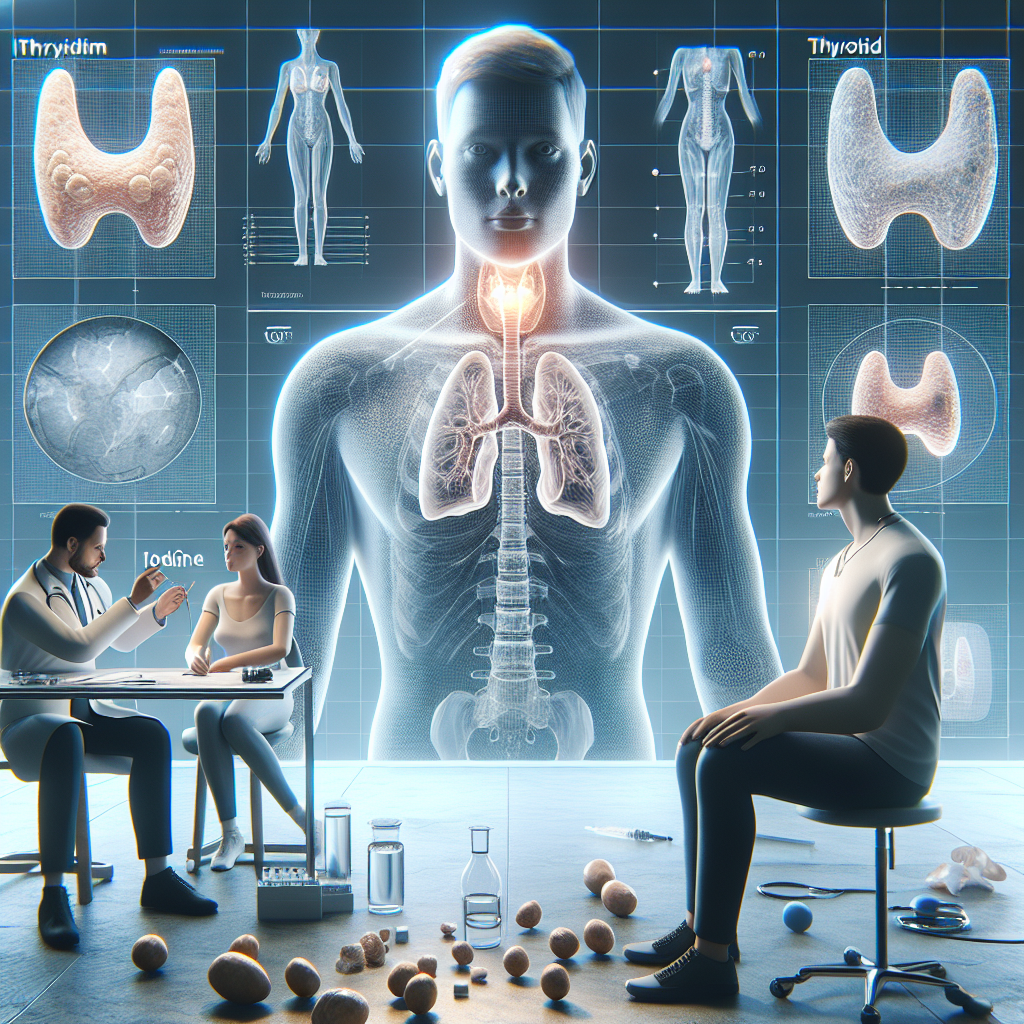
Fatigue, cold intolerance, and weight changes do not automatically mean iodine deficiency
One of the most common mistakes in thyroid conversations is assuming that a “slow thyroid” and iodine deficiency are basically the same thing. They are not. Iodine is a raw material the thyroid uses to make hormones, but low thyroid function can also result from autoimmune disease, medication effects, pituitary signaling problems, inflammation, illness, or altered hormone conversion in the liver and other tissues. That distinction matters, because symptoms overlap while the biology differs.
The thyroid produces mostly thyroxine (T4) and smaller amounts of triiodothyronine (T3). Iodine is built directly into both hormones. Without enough iodine, the gland cannot efficiently synthesize adequate thyroid hormone. In contrast, a person can have enough iodine intake and still develop hypothyroid symptoms if the gland is under autoimmune attack, if T4 is not converting well to T3, or if the hypothalamus-pituitary-thyroid axis is dysregulated.
This is why symptom-based self-diagnosis is unreliable. Brain fog, constipation, dry skin, hair shedding, lower exercise tolerance, depressed mood, and menstrual changes can occur in iodine deficiency, but they can also occur in primary hypothyroidism, iron deficiency, low energy intake, chronic stress, sleep disruption, and menopause-related hormonal shifts.
The mechanism: where iodine fits, and where it does not
Iodine enters thyroid cells through the sodium-iodide symporter, then gets incorporated into tyrosine residues on thyroglobulin. Through the action of thyroid peroxidase, iodinated compounds are coupled to form T4 and T3. This is the classic reason iodine is essential: no iodine, no normal thyroid hormone production.
But that is only one layer of thyroid physiology. After T4 is made, much of its metabolic activity depends on conversion into T3 by deiodinase enzymes in tissues such as the liver, kidneys, and skeletal muscle. Selenium is involved in those enzymes. In other words, normal thyroid function depends not only on iodine supply, but also on hormone conversion, receptor signaling, transport, and immune tolerance.
The key practical point: iodine deficiency is a nutrient supply problem; thyroid slowdown is a broader functional state with several possible causes.
Why the confusion happens in real life
People often connect iodine with the thyroid because the association is true, but incomplete. Historically, severe iodine deficiency caused goiter and clear thyroid dysfunction in certain regions. Today, the picture is more nuanced. In many countries, overt iodine deficiency is less common than mild insufficiency or fluctuating intake patterns. Meanwhile, thyroid symptoms are now frequently linked to autoimmune thyroiditis, post-pregnancy changes, medication use, and metabolic stress.
There is also a nutrition pattern issue. People following restrictive diets, avoiding dairy and seafood, using non-iodized specialty salts, or eating mostly minimally processed foods without intentional iodine sources may drift into lower intake. Vegans are a particularly important group to assess carefully, because iodine intake can become inconsistent unless sea vegetables, fortified foods, or supplements are used strategically. In that context, an iodine-containing option such as a vegan multinutrient with iodine may be relevant for some adults who are trying to close basic intake gaps rather than chase high-dose thyroid support.
How iodine deficiency tends to present differently
Iodine deficiency is more likely when symptoms appear alongside a pattern of low intake. That usually means little or no seafood, eggs, or dairy, reliance on non-iodized salt, limited processed foods, and no regular supplement containing iodine. Pregnancy and lactation raise iodine requirements further, making insufficiency more likely if intake is not adjusted.
Clues that may point toward iodine deficiency include:
- Very low habitual intake of iodine-rich foods
- Use of gourmet salts that do not contain iodine
- Vegan or highly restricted eating patterns without a supplementation plan
- Living in a household that rarely uses iodized salt
- Higher physiological demand, such as pregnancy
Still, even these clues are not enough to confirm the cause. A person may have low iodine intake and normal thyroid labs, or normal iodine intake and significant hypothyroidism from another mechanism.
How thyroid slowdown can happen without iodine deficiency
Primary hypothyroidism is often driven by autoimmune thyroid disease, especially Hashimoto’s thyroiditis. In that situation, the thyroid tissue itself is damaged by immune activity. The issue is not simply a missing nutrient. The gland may struggle even when iodine intake is technically adequate. In fact, reflexively increasing iodine in someone with autoimmune susceptibility is not always the right move.
Thyroid slowdown can also happen through:
- Reduced conversion of T4 to T3 during illness, calorie restriction, inflammation, or chronic stress
- Medication effects, including drugs that interfere with thyroid physiology
- Postpartum immune changes
- Pituitary or hypothalamic dysfunction affecting TSH signaling
- Micronutrient issues beyond iodine, especially selenium and iron
This is where simplistic advice fails. If the real problem is hormone conversion, tissue sensitivity, or autoimmune inflammation, more iodine does not solve the core issue.
The supplement mistake: assuming more iodine is always better
One of the most important clinical distinctions is that both too little and too much iodine can create thyroid problems. The thyroid needs an appropriate range, not an indiscriminate push. High-dose iodine supplements, frequent kelp products, or stacking multiple thyroid formulas can produce intake levels that are unnecessary or poorly tolerated in susceptible individuals.
That matters especially for people with known thyroid disease, a family history of autoimmune thyroid conditions, or existing abnormal thyroid labs. Self-prescribing iodine because of fatigue or weight gain can delay proper assessment. It can also confuse the picture if lab testing is done after a sudden change in intake.
A better approach is to ask two separate questions: Is iodine intake consistently adequate? And is thyroid function actually impaired on testing?
What to look at before blaming iodine
When symptoms suggest thyroid dysfunction, intake history is valuable, but it should sit beside clinical context. Consider whether the person is sleeping poorly, under-eating, postpartum, iron deficient, or dealing with autoimmune disease. These factors can mimic or worsen hypothyroid-like symptoms.
Useful questions include:
- Do you regularly eat seafood, dairy, eggs, or use iodized salt?
- Have you recently shifted to vegan, paleo, or highly restrictive eating?
- Are you taking multiple supplements that contain seaweed, kelp, or thyroid blends?
- Have you had thyroid labs such as TSH and free T4 checked?
- Is there a history of Hashimoto’s, goiter, pregnancy, or postpartum thyroid changes?
For people also noticing weight pattern changes, metabolic slowdown can be difficult to interpret because body size and thyroid symptoms influence each other. A neutral tool like the BMI calculator can help frame weight context, but it should not be used to diagnose thyroid disease.
Food-first iodine strategy: enough, not excessive
If intake appears low, the goal is usually to restore adequacy rather than use megadoses. Food sources include seafood, dairy, eggs, and iodized salt. Seaweed can contain iodine, but its content is highly variable, which makes routine dosing less predictable. That variability is one reason structured supplements with clearly labeled amounts are often easier to manage than relying on random seaweed intake.
For adults with low-risk intake gaps, a modest, labeled product such as an iodine-containing daily multivitamin for plant-based diets may be more practical than high-potency thyroid formulas. The goal is nutritional adequacy, not forcing thyroid output.
This is also where co-nutrients matter. Selenium helps with deiodinase activity and antioxidant protection inside the thyroid. Iron is relevant because thyroid peroxidase activity can be impaired in iron deficiency. So if someone feels unwell despite seemingly reasonable iodine intake, the broader nutrient picture deserves attention.
When symptoms need medical evaluation
Persistent fatigue, swelling in the neck, significant hair loss, constipation, menstrual disruption, depression, infertility concerns, or marked sensitivity to cold warrant proper evaluation rather than supplement trial-and-error. Thyroid blood work, medication review, pregnancy status, and sometimes antibody testing help separate nutrient insufficiency from gland dysfunction.
This distinction is especially important because the phrase “thyroid slowdown” is often used casually online, while real thyroid disorders require precise interpretation. A mildly tired person with low iodine intake is not the same as a person with autoimmune hypothyroidism, and the intervention should not be the same either.
The bottom line
Iodine deficiency and thyroid slowdown can look similar on the surface, but they are not interchangeable. Iodine deficiency is a substrate problem: the thyroid lacks a key building block. Thyroid slowdown is a broader outcome that may result from autoimmune disease, poor conversion, altered signaling, illness, or several nutrient issues at once.
The smartest next step is not guessing from symptoms alone. It is checking whether intake is actually low, whether labs support impaired thyroid function, and whether another mechanism explains the picture better. In thyroid health, precision matters more than popularity.
Image prompts
- Thyroid hormone production diagram showing iodine incorporation into T4 and T3 inside thyroid follicles
- Comparison graphic of iodine deficiency versus autoimmune hypothyroidism with overlapping symptoms and different mechanisms
- Kitchen scene with iodized salt, seaweed, dairy, eggs, and seafood labeled as common iodine sources
- Clinical-style infographic showing TSH, free T4, T3 conversion, selenium, and iodine roles in thyroid physiology
- Person reviewing supplement labels for iodine content with caution against high-dose kelp products


