
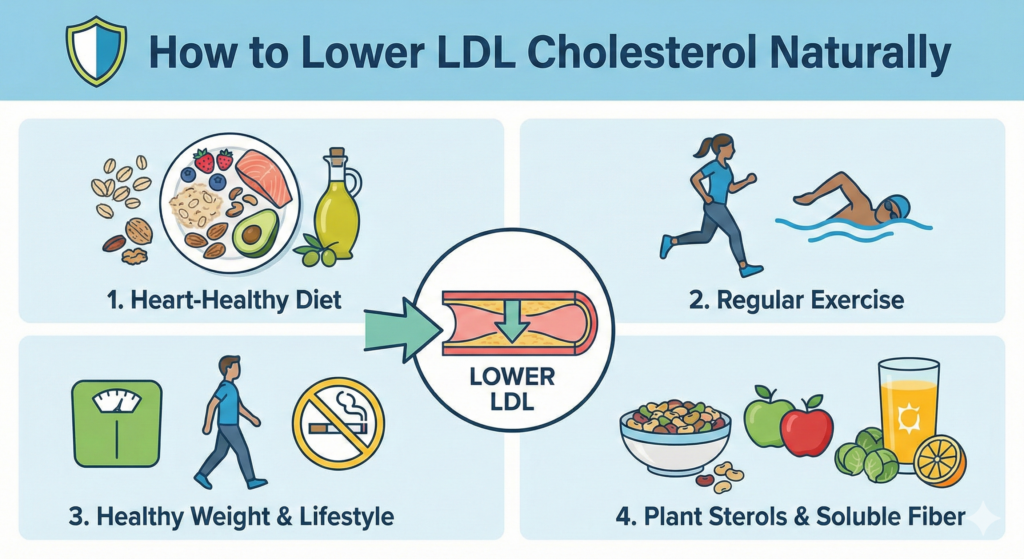

LDL cholesterol is often called “bad cholesterol,” but the real issue isn’t cholesterol itself. Risk rises when LDL particles become more atherogenic (for example, small and dense), oxidize more easily, and accumulate in artery walls. In many people, LDL can be reduced meaningfully with targeted diet and lifestyle changes—often within 6–12 weeks.
What LDL Is (And Why It Matters)
LDL (low-density lipoprotein) transports cholesterol through the bloodstream. Cholesterol is essential for hormones, cell membranes, and bile acids. The problem is not “having cholesterol,” but having too many atherogenic particles over time, especially in the presence of inflammation, insulin resistance, smoking, and other risk factors.
1) Increase Soluble Fiber (The Fastest Dietary Win)
Soluble fiber binds bile acids in the gut and helps remove them. Because bile acids are made from cholesterol, the body pulls more cholesterol from the blood to replace them—often lowering LDL.
- Top sources: oats (beta-glucan), psyllium husk, beans and lentils, flaxseed, apples and citrus
- Practical target: 25–35 g total fiber/day
- Soluble fiber target: ~5–10 g/day (often enough to move LDL)
Simple routine: oatmeal + 1 tbsp ground flax + berries; add 1 serving legumes daily; consider psyllium in water 1–2×/day.
2) Replace Saturated Fat (Don’t Replace It With Sugar)
Lowering saturated fat can reduce LDL, but the replacement matters. Swapping saturated fat for refined carbohydrates may not improve—and can sometimes worsen—lipid markers. The best swap is toward unsaturated fats (especially monounsaturated and omega-3 fats).
- Better swaps: butter → extra virgin olive oil; processed meats → fish/legumes; cream → Greek yogurt; pastries → nuts/fruit
- Practical guideline: keep saturated fat roughly ~7–10% of calories for LDL-lowering phases
3) Eat More “LDL-Lowering” Foods (Portfolio Approach)
A combination of specific foods often works better than focusing on just one change. A “portfolio” style approach has been associated with clinically meaningful LDL reductions.
- Oats and barley (beta-glucan)
- Nuts (especially almonds and walnuts)
- Legumes (beans, lentils, chickpeas)
- Extra virgin olive oil
- Fruits and vegetables (polyphenols + fiber)
4) Prioritize Protein Quality (And Reduce Ultra-Processed Foods)
Ultra-processed foods often combine refined carbs, poor fats, and low fiber—an unfavorable combination for LDL, triglycerides, and inflammation.
- Choose: fish, eggs (individual tolerance varies), yogurt/kefir, poultry, legumes, tofu/tempeh
- Limit: processed meats, fast food, packaged sweets, trans fats (avoid completely)
5) Improve Insulin Sensitivity (Key for “Small Dense” LDL)
Insulin resistance tends to increase VLDL production, raise triglycerides, and shift LDL toward smaller, denser particles. Improving insulin sensitivity can improve the entire lipid profile.
- Movement: 8–10k steps/day (or equivalent)
- Training: resistance training 2–4×/week + moderate cardio
- Diet: reduce refined carbs and sugary drinks; focus on fiber and protein
- Sleep: 7–8 hours consistently (sleep debt worsens insulin sensitivity)
6) Lose Visceral Fat (Even 5–10% Makes a Difference)
Visceral (abdominal) fat is strongly linked with inflammation, insulin resistance, higher triglycerides, and more atherogenic lipoproteins. Losing even a modest amount of weight can meaningfully improve markers.
- Target: 5–10% weight loss if overweight
- Measure: waist circumference is often more predictive than BMI
7) Add Omega-3s (Especially If Triglycerides Are High)
Omega-3 fatty acids (EPA/DHA) are best known for lowering triglycerides, but they can also improve LDL particle characteristics and reduce inflammation.
- Food first: salmon, sardines, mackerel 2×/week
- Supplement target: ~1–2 g EPA+DHA/day (higher doses should be supervised)
8) Consider Evidence-Based Supplements (When Lifestyle Isn’t Enough)
Some supplements have clinically meaningful LDL-lowering effects. They’re most effective when paired with the dietary changes above.
| Supplement | Typical Effect on LDL | Notes |
|---|---|---|
| Psyllium husk | ~5–10% | Also improves regularity; start low and increase with water. |
| Plant sterols/stanols | ~5–10% | Most effective at ~2 g/day from fortified foods/supplements. |
| Berberine | ~10–20% | Also supports glucose metabolism; check interactions/contraindications. |
| Bergamot extract | ~10–25% | May support multiple lipid markers; quality varies by brand. |
| Red yeast rice | ~15–25% | Acts like a low-dose statin. Avoid if pregnant; discuss with a clinician; ensure safety testing. |
Important: If you use red yeast rice, treat it like a medication: monitor liver enzymes if advised, and avoid combining with statins unless supervised.
9) Reduce Chronic Inflammation (Oxidized LDL Matters)
Inflammation increases the likelihood that LDL becomes oxidized and contributes to plaque formation. Supporting overall metabolic health lowers risk beyond the LDL number alone.
- Mediterranean-style eating pattern
- Polyphenols: berries, olive oil, cocoa, green tea
- Regular exercise
- Adequate vitamin D (based on testing when possible)
- Stop smoking (if applicable)
10) Alcohol: Be Honest About Dose
While small amounts of red wine may raise HDL in some people, alcohol can raise triglycerides and strain the liver, which can indirectly worsen lipid metabolism. If LDL or triglycerides are stubbornly high, reducing alcohol is often one of the simplest experiments to run for 4–8 weeks.
What Matters More Than LDL Alone?
LDL is important, but modern cardiology often looks at additional markers when available:
- Non-HDL cholesterol (all atherogenic cholesterol)
- ApoB (number of atherogenic particles)
- Triglyceride/HDL ratio (metabolic health proxy)
If you can only track one extra marker beyond LDL, non-HDL is a practical choice because it’s easy to calculate from standard panels.
How Fast Can LDL Drop?
- 4–6 weeks: measurable change
- 8–12 weeks: often clinically meaningful improvement
Combining fiber + fat swaps + training + modest weight loss can reduce LDL substantially for many people.
FAQ
Can I lower LDL without losing weight?
Yes. Increasing soluble fiber, improving fat quality, and reducing saturated fat can lower LDL even without weight loss. However, visceral fat loss often improves the overall lipid profile more broadly.
Is coconut oil good or bad for LDL?
Coconut oil is high in saturated fat and often raises LDL in many individuals. If LDL is your priority, use olive oil, avocado oil, or nuts as primary fats instead.
Do eggs raise LDL?
Responses vary. Many people see little change, but “hyper-responders” may see LDL rise. If your LDL is high, test your response by limiting eggs for 4–6 weeks and rechecking labs.
What’s the best single food for lowering LDL?
Soluble fiber sources (oats, psyllium, legumes) are among the most reliable. But the best results usually come from combining multiple strategies (a “portfolio” approach).
When should I consider medication?
If you have existing cardiovascular disease, diabetes, very high LDL, strong family history, or elevated ApoB despite lifestyle changes, medication may be appropriate. Discuss your risk profile and lab markers with a clinician.