

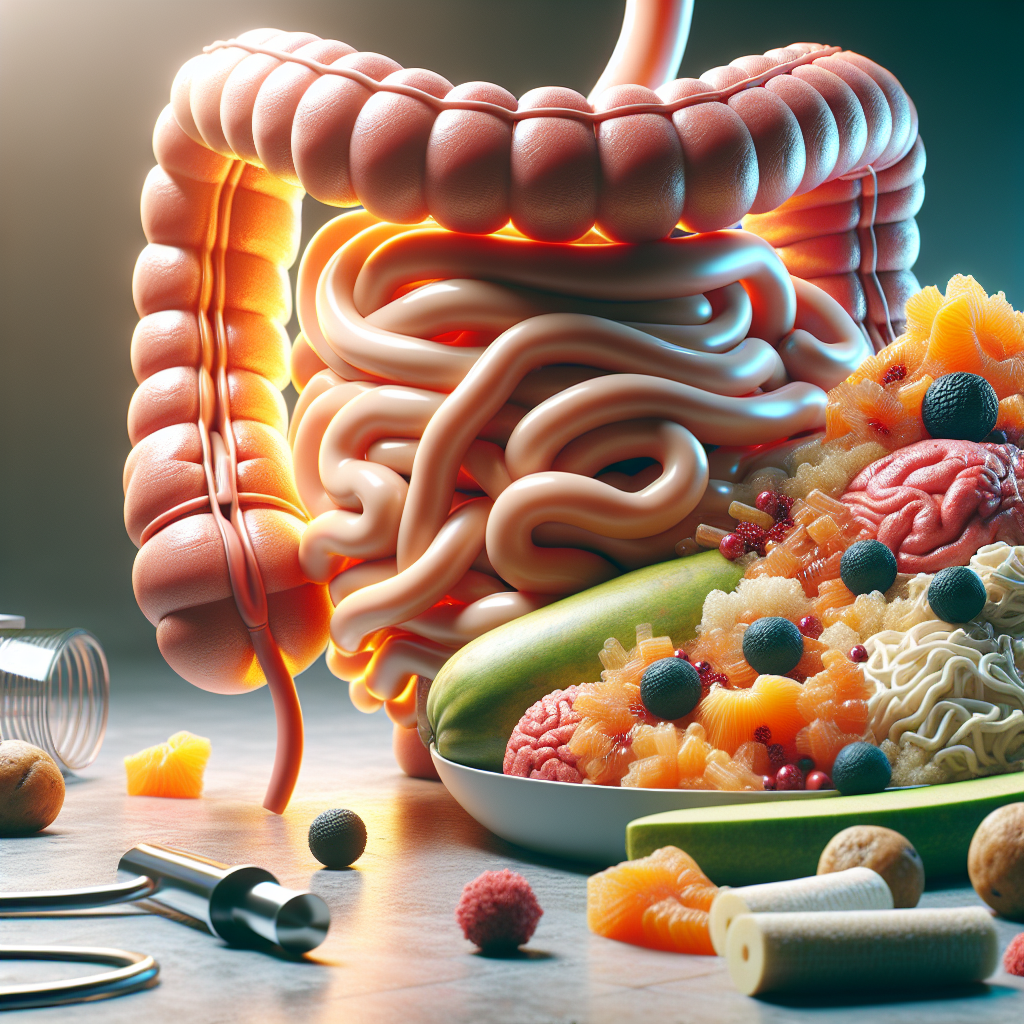
Bloating after healthy foods is often a timing problem inside the gut, not proof that the food is “bad”
If salads, beans, oats, kefir, protein smoothies, or high-fiber snacks leave you feeling swollen, tight, or gassy, the issue is often not the food itself. In many cases, the problem is a mismatch between what your gut microbes can handle and how quickly that food reaches the colon. Foods commonly labeled as healthy tend to contain fermentable fibers, resistant starches, polyols, and plant compounds that interact directly with the gut microbiome. When that system is out of balance, even nutritious meals can create excessive gas, pressure, and distension.
This is why one person feels energized after lentils and yogurt while another feels uncomfortable for hours. The difference is not only digestion in the stomach. It also involves microbial composition, intestinal transit, gut sensitivity, meal structure, and recent diet history. A low-fiber eater who suddenly switches to a “clean” diet often experiences bloating simply because the microbiome has not adapted to the new fermentable load.
The mechanism: healthy foods feed microbes, and microbes produce gas
Many healthy foods are rich in substrates that human enzymes do not fully digest. These compounds pass into the large intestine, where microbes ferment them. This process produces short-chain fatty acids, which can support the gut lining, but it also generates gases such as hydrogen, methane, and carbon dioxide. In the right amount, fermentation is normal. In the wrong context, it feels like bloating.
Common examples include:
- Beans and lentils: rich in galacto-oligosaccharides that are highly fermentable
- Cruciferous vegetables: contain fibers and sulfur compounds that can increase gas production in sensitive people
- Onions, garlic, and asparagus: high in fructans, a common trigger for bloating
- Apples, pears, and watermelon: can contain excess fructose or polyols
- Protein bars and “healthy” sweets: often include sugar alcohols such as erythritol or sorbitol
- Yogurt, kefir, and soft dairy: may be poorly tolerated if lactose digestion is limited
The important distinction is this: bloating does not automatically mean the food is unhealthy. It may mean the microbiome is producing gas faster than your gut can move it, your intestinal wall is unusually sensitive to stretching, or your dietary shift has been too abrupt.
Why the microbiome matters more than most people realize
The microbiome helps determine how efficiently food is broken down once it reaches the colon. Different bacteria prefer different fuel sources. If your diet has been low in fiber for a long time, your microbial community may be less prepared for larger amounts of legumes, prebiotic fibers, or raw vegetables. Suddenly increasing these foods can increase fermentation before your system adapts.
There is also the question of balance. Some people may have a microbial pattern that favors more gas production from certain carbohydrates. Others may have altered motility, which allows gas to linger longer. Some may have increased visceral sensitivity, meaning the same amount of gas feels more intense. This is one reason symptoms can be real and disruptive even when routine tests appear normal.
Short-chain fatty acids produced by microbial fermentation are often beneficial for colon cells. But the path to producing them is not always symptom-free. A person trying to “heal the gut” by layering chia seeds, green smoothies, kombucha, probiotic yogurt, and fiber powder all at once may accidentally create a fermentation overload.
The most common mistake: adding too many “gut-healthy” foods at the same time
A very common pattern in practice is the healthy-food stack. Someone decides to improve digestion and starts the day with oats, flax, berries, a probiotic yogurt, and a greens powder. Lunch includes a large salad with chickpeas, onions, and broccoli. Later they add kombucha and a high-fiber snack bar. Each item can be reasonable on its own. Together, they create a concentrated fermentable load.
This does not mean those foods should never be eaten. It means dose, sequencing, and preparation matter. The microbiome tends to adapt better to gradual increases than to sudden jumps. Cooking vegetables, soaking legumes, spreading fiber across the day, and avoiding multiple fermentable foods in a single meal can reduce symptoms while preserving nutritional quality.
Signs the issue may be a fermentation mismatch rather than a food intolerance
- Bloating is worse after very high-fiber meals than after lower-fiber meals
- Symptoms increase when you “eat extra healthy”
- You tolerate small portions but not large servings
- Bloating worsens with beans, onions, garlic, or sugar alcohols
- Symptoms changed after antibiotics, illness, travel, or a major diet shift
These patterns suggest that food quantity, fermentability, and microbial response may be more relevant than the idea that the food is inherently harmful.
Raw, cold, blended, and rushed meals can change the symptom picture
The form of healthy food matters. Raw vegetables are not the same experience as cooked vegetables. A blended smoothie is not always gentler than a plated meal. In fact, smoothies can deliver a large amount of fruit, fiber, protein additives, gums, and sweeteners very quickly, which may increase bloating in susceptible people.
Eating speed also matters. Fast eating increases swallowed air, and large meals increase gastric and intestinal distension. If that meal also contains fermentable carbohydrates, the combined effect can feel much worse. This is one reason people often blame a healthy salad when the real issue is the combination of raw volume, beans, crucifers, dressing additives, and rapid eating during a work break.
Probiotics and prebiotics can help some people, but they can also backfire when introduced too aggressively
The word microbiome leads many people to assume that more probiotics and more prebiotic fiber are always better. In reality, response varies. Prebiotics such as guar fiber, inulin, fructooligosaccharides, and resistant starch can be useful, but they are also fermentable. If introduced too quickly, they can worsen gas before tolerance improves.
Probiotics are similarly individual. Some people notice better regularity and less bloating over time, while others feel more pressure during the adjustment period. Product format, strain selection, dose, and timing all matter. For people who want a gradual, food-plus-fiber approach, a formula like a daily gut support blend with probiotics and gentle prebiotic fiber may fit better than taking several separate products at once. Others may prefer a simpler synbiotic capsule such as a targeted microbiome support capsule because it reduces the temptation to stack multiple gut products together.
Supplements are not a substitute for clinical evaluation, and more is not necessarily better. The practical goal is to lower symptom burden while allowing the microbiome to adapt gradually.
How to reduce bloating without removing every healthy food
1. Change the dose before you eliminate the food
If half a cup of beans causes discomfort, try a few tablespoons instead of cutting them out entirely. The same applies to oats, chia, or cruciferous vegetables. Tolerance is often dose-dependent.
2. Cook more, at least temporarily
Cooking softens plant structure and may reduce the digestive burden compared with large raw salads or raw cruciferous vegetables. This can be a useful bridge while symptoms settle.
3. Avoid stacking fermentable foods in one meal
Try not to combine onions, garlic, beans, cauliflower, apples, and a fiber-fortified snack in the same eating window. A meal can be healthy without containing every healthy ingredient at once.
4. Increase fiber slowly
A sudden shift from a low-fiber pattern to a high-fiber pattern is one of the most common reasons for bloating. Gradual changes give the microbiome and motility pattern more time to adapt.
5. Watch for hidden additives in “healthy” products
Protein powders, wellness bars, sugar-free gums, and flavored waters may contain inulin, chicory root, gums, or sugar alcohols. These can be more bloating than whole foods.
6. Review bowel patterns
Constipation often amplifies bloating because gas and stool remain in the system longer. If bloating is persistent, stool frequency and completeness matter as much as food choice.
7. Use symptom tracking, not food fear
Look for patterns in portion size, preparation, meal timing, and combinations. This is usually more informative than labeling a food as universally good or bad. General metabolic tracking tools can also help put symptoms into a wider lifestyle context; for example, some people reviewing eating patterns also monitor body composition trends with a BMI calculator.
When bloating after healthy foods deserves medical attention
Educational content can explain mechanisms, but persistent bloating should not be self-diagnosed indefinitely. It is worth speaking with a clinician if bloating is new, worsening, or accompanied by alarm features such as unintentional weight loss, vomiting, blood in the stool, anemia, severe pain, fever, or a major change in bowel habits. Conditions such as celiac disease, inflammatory bowel disease, lactose malabsorption, pelvic floor dysfunction, constipation, and other gastrointestinal disorders can overlap with microbiome-related symptoms.
It is also useful to remember that “healthy foods cause bloating” can sometimes reflect a pattern rather than a single diagnosis. One person may have lactose malabsorption plus a high-prebiotic diet. Another may have constipation plus rapid fiber loading. Another may simply be eating large, raw, rushed meals. The mechanism matters because the solution depends on the mechanism.
The bottom line
Bloating after healthy foods is often less about the healthfulness of the food and more about the interaction between fermentable carbohydrates, gut motility, microbial activity, and symptom sensitivity. The microbiome plays a central role: it transforms fibers and resistant carbohydrates into useful metabolites, but it also produces gas. When meal composition, pacing, or recent diet changes overwhelm that system, bloating can follow.
The practical takeaway is not to fear nutritious foods. It is to adjust the way they are introduced, prepared, combined, and portioned. In gut health, the most helpful question is often not “Is this food healthy?” but “Is my current microbiome and digestive pattern ready for this amount, in this form, right now?”


