

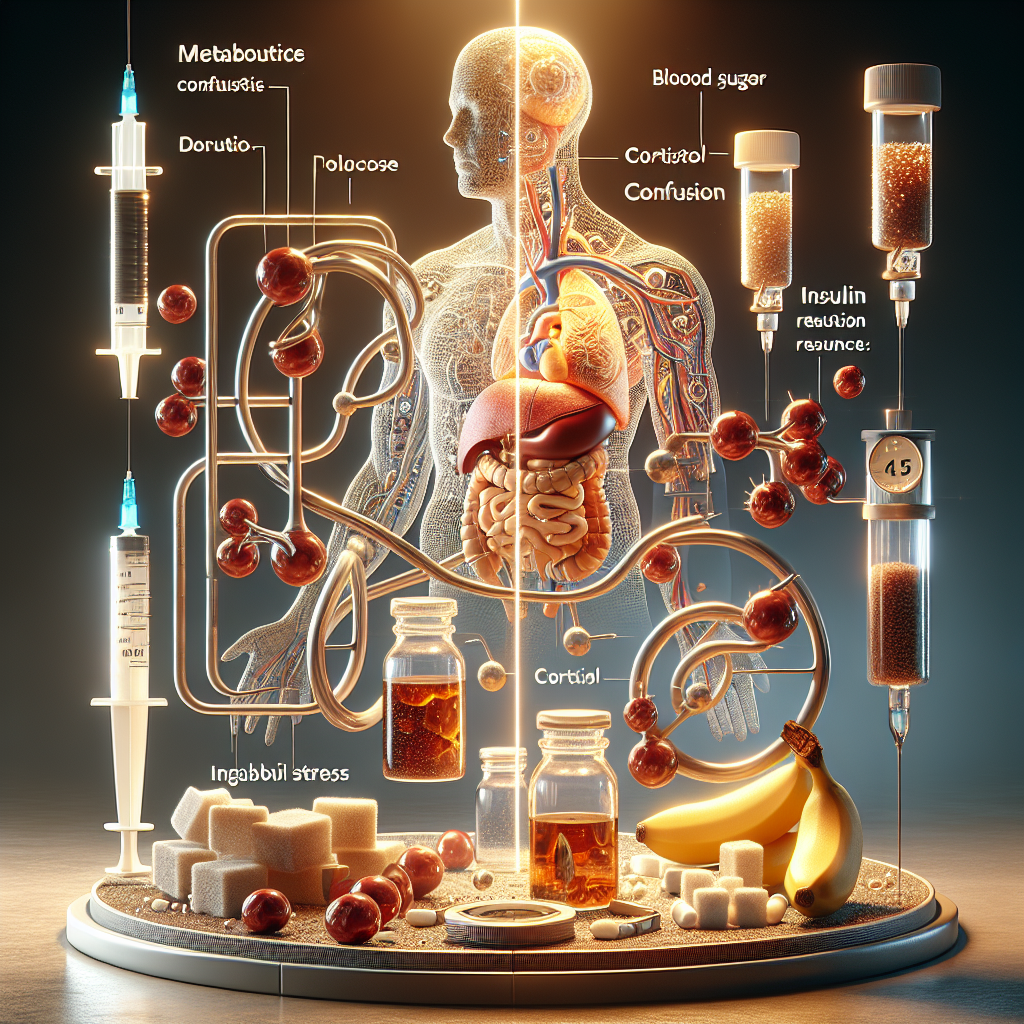
Blood sugar instability can imitate “high cortisol” surprisingly well
Jitteriness after meals, a 3 p.m. crash, waking at 3 a.m., feeling “tired but wired,” sudden irritability, and stress sensitivity are often blamed on cortisol alone. But in real physiology, cortisol and glucose regulation are tightly connected. Many people who think they have a primary cortisol problem are actually dealing with a metabolic mismatch: blood sugar rises too fast, falls too fast, and the stress system steps in to compensate.
That compensation matters. When glucose drops or becomes unstable, the body does not simply “run low on fuel.” It activates a defense response. Adrenaline and cortisol help increase glucose availability by stimulating glycogen breakdown, supporting gluconeogenesis, and shifting energy use. In other words, cortisol may be reacting to glucose volatility rather than causing it in the first place.
The mechanism: why unstable glucose can drive cortisol confusion
Your brain depends on a steady energy supply. When blood glucose rises sharply after a refined-carb-heavy meal, insulin may rise sharply too. In some people, especially those with early insulin resistance, stress load, poor sleep, or inconsistent meal timing, the post-meal pattern becomes exaggerated: rapid spike, then rapid decline. Even if glucose does not reach formal hypoglycemia, a fast downward swing can feel threatening to the nervous system.
This is where confusion begins. The body interprets that drop as a need for counter-regulation. It may increase sympathetic output and stimulate cortisol release to restore energy balance. The person then experiences palpitations, anxiety, shakiness, brain fog, urgency to eat, and a strong sense that their hormones are “off.”
The key point: cortisol is often part of the rescue system. If the metabolic pattern is unstable, cortisol can become chronically more visible.
Why this can happen even without diabetes
You do not need diagnosed diabetes for this pattern to show up. Several common factors can create blood sugar swings:
- Large carbohydrate loads without protein, fiber, or fat
- Long gaps between meals followed by overeating
- Poor sleep, which reduces insulin sensitivity
- High caffeine intake, especially on an empty stomach
- Chronic psychological stress, which raises glucose output from the liver
- Low muscle mass or low physical activity, reducing glucose disposal
These patterns can create a loop: stress worsens glucose regulation, and unstable glucose amplifies stress hormones.
Why symptoms are easy to misread
Many articles treat cortisol symptoms as though they are unique. They are not. The overlap with blood sugar dysregulation is substantial.
Symptoms often blamed on cortisol that may also reflect glucose swings
- Mid-morning or afternoon anxiety
- Energy crashes after eating
- Cravings for sugar or fast carbs
- Night waking with a “surge” feeling
- Difficulty concentrating under stress
- Feeling shaky, nauseated, or lightheaded when meals are delayed
- Irritability that improves quickly after eating
If symptoms reliably improve after a balanced meal, the issue may not be “adrenal fatigue” or isolated cortisol dysfunction. It may be a metabolic pattern involving insulin, glucose variability, and stress signaling.
The morning mistake: using cortisol language to explain a metabolic problem
One of the most common mistakes is assuming that feeling wired in the morning means cortisol is automatically too high. Sometimes that is partly true, but the context matters. A person who sleeps poorly, drinks coffee before food, and eats a pastry or skips breakfast altogether may set up a perfect storm of stress signaling and unstable glucose.
Caffeine can increase catecholamine activity. Sleep loss reduces insulin sensitivity. A low-protein or high-sugar first meal can create a sharp glucose rise followed by a crash. The resulting sensation feels hormonal because it is hormonal—but not in a simple, one-hormone way.
This is the core confusion: metabolic instability and stress-hormone activation often happen together, so people name the loudest symptom rather than the underlying pattern.
How cortisol and blood sugar influence each other in both directions
The relationship is not one-way. Yes, glucose swings can trigger cortisol. But elevated cortisol from chronic stress can also worsen glucose regulation.
What higher cortisol can do metabolically
- Increase hepatic glucose output
- Reduce insulin sensitivity over time
- Promote central fat storage in susceptible individuals
- Increase appetite for calorie-dense foods
- Disrupt sleep, which further worsens glycemic control
That is why this issue should not be framed as blood sugar versus cortisol. The more useful lens is feedback loops. Once the loop starts, each side can reinforce the other.
Who is especially prone to this pattern?
Several groups commonly experience cortisol confusion driven by metabolic instability:
- People under chronic work or caregiving stress
- Those eating irregularly due to busy schedules
- Individuals relying on caffeine to override fatigue
- People with abdominal weight gain or suspected insulin resistance
- Shift workers and poor sleepers
- Perimenopausal women, where sleep disruption and glucose variability may intensify each other
In these groups, symptoms may be interpreted as purely endocrine, when daily rhythm, meal composition, and metabolic resilience are major contributors.
Practical signs that the metabolic side deserves attention first
You do not need to self-diagnose, but certain patterns make blood sugar instability more plausible:
- You feel worse after high-carb meals than after balanced meals
- You become anxious or shaky when you go too long without eating
- Your sleep is disrupted after alcohol, dessert, or very late dinners
- You crave quick sugar during stress rather than regular meals
- You get “second wind” energy at night after daytime crashes
If this sounds familiar, a useful educational next step is to review markers associated with insulin resistance. The HOMA-IR calculator can help you understand how fasting glucose and fasting insulin are interpreted together. It is not a diagnosis, but it can make the metabolic picture easier to discuss with a clinician.
What “metabolic support” really means here
Because the focus nutrient is metabolic, the goal is not to chase a single miracle compound. It is to support the physiology that makes glucose handling more stable and reduces unnecessary stress-hormone activation.
Foundational metabolic strategies
- Anchor meals with protein: protein slows gastric emptying, improves satiety, and helps reduce exaggerated glucose excursions.
- Add fiber and intact foods: less processed carbohydrates are absorbed more gradually.
- Do not use caffeine as breakfast: pairing caffeine with food is often better tolerated than taking it fasted.
- Reduce long fasting gaps if they trigger symptoms: not everyone benefits from pushing intermittent fasting when stress load is already high.
- Use movement after meals: even a short walk can improve post-meal glucose disposal.
- Protect sleep: one poor night can impair glucose regulation the next day.
Where supplements may fit—carefully and realistically
Supplements should support a plan, not replace it. For people dealing with energy volatility and stress-heavy metabolic patterns, nutrients involved in mitochondrial energy handling and inflammatory signaling are often discussed. This does not mean they directly “fix cortisol,” but they may support the broader terrain.
For example, CoQ10 for cellular energy support may be relevant in routines focused on metabolic efficiency, especially when fatigue and poor recovery are prominent. Likewise, a bioavailable curcumin supplement may fit an overall strategy centered on metabolic stress and inflammatory balance. These are not treatments for blood sugar disorders, but they can be part of a broader clinician-guided approach.
The real-world pattern clinicians often see
Many people arrive focused on a hormone story: “My cortisol must be high because I am anxious, exhausted, and wake up at night.” But when meal timing, food composition, sleep, caffeine, and stress rhythms are reviewed, the pattern often looks less mysterious. They are under-fueled early, overstimulated by caffeine, eating reactively later, and riding a cycle of spikes and crashes.
That does not mean cortisol is irrelevant. It means cortisol is participating in a larger system response. If you only target stress reduction while ignoring the metabolic pattern, symptoms may persist. If you only focus on carbohydrates without addressing sleep and psychological load, the loop may also continue.
When to seek medical evaluation
Educational content should not replace medical care. It is important to speak with a qualified clinician if you have recurrent dizziness, fainting, major unintended weight change, severe fatigue, persistent night sweats, symptoms of significant hyperglycemia, or concern about endocrine conditions. Thyroid dysfunction, medication effects, sleep disorders, menopause transition, insulin resistance, and other conditions can overlap with the pattern described here.
The takeaway
Blood sugar swings and cortisol confusion are not separate topics. They are often different views of the same stress-metabolic loop. If symptoms are interpreted through a cortisol-only lens, the everyday drivers of instability can be missed. But when meal structure, sleep quality, caffeine timing, movement, and metabolic resilience are addressed together, the physiology usually makes more sense.
The most useful question is not “Is this cortisol or blood sugar?” It is: what pattern is forcing the body to keep using stress hormones as a backup energy strategy?


