

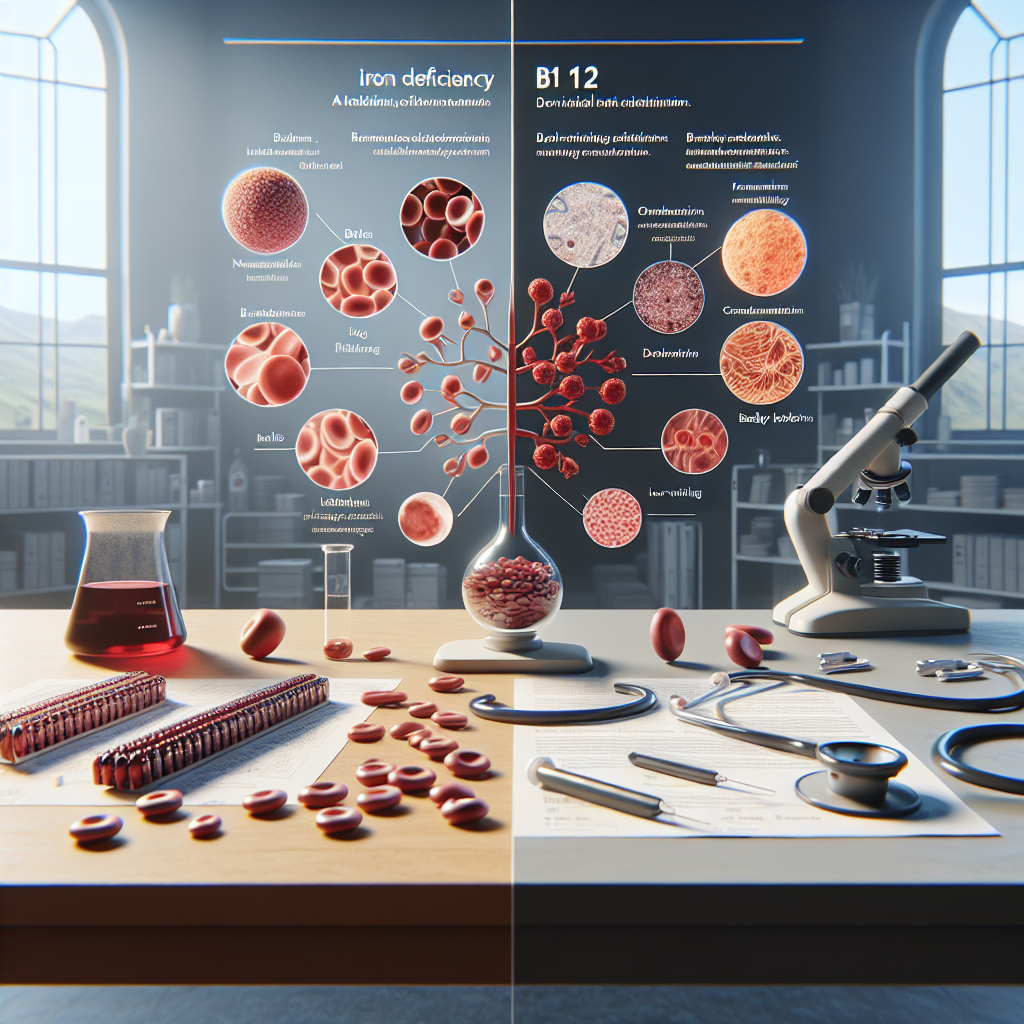
Fatigue is where the confusion starts
Iron deficiency and low vitamin B12 are often lumped together because both can cause tiredness, weakness, reduced exercise tolerance, brain fog, and pale skin. But they do not create those symptoms through the same pathway. That distinction matters, because people frequently self-treat the wrong problem. Someone with iron deficiency may focus only on B12 for “energy,” while someone with low B12 may keep taking iron even though their nervous system symptoms are the more urgent clue.
The core difference is this: iron is primarily about oxygen transport, while B12 is primarily about DNA synthesis and nerve function. Both can affect red blood cells, but they do it at different stages and in different ways.
The mechanism: how iron deficiency differs from low B12
Iron deficiency: too little raw material for hemoglobin
Iron is a central component of hemoglobin, the protein inside red blood cells that binds and carries oxygen. When iron stores fall, the body cannot build hemoglobin efficiently. Over time, red blood cells tend to become smaller and carry less hemoglobin, which reduces oxygen delivery to tissues. That is why iron deficiency often shows up as fatigue during exertion, shortness of breath, reduced stamina, headaches, dizziness, and sometimes heart palpitations.
Iron deficiency usually develops in stages. First, iron stores decline. Then iron available for red blood cell production becomes insufficient. Finally, hemoglobin drops enough to produce iron deficiency anemia. Symptoms can appear before full anemia is obvious on a routine blood count.
Low B12: impaired cell division and neurological stress
Vitamin B12 is required for DNA synthesis, red blood cell maturation, methylation reactions, and maintenance of the myelin sheath that surrounds nerves. When B12 is low, the bone marrow struggles to produce normal mature red blood cells. Instead of small cells, B12 deficiency classically leads to large, underdeveloped red blood cells because cell division is impaired.
This is why low B12 can share anemia-related symptoms with iron deficiency, but it also has a different signature: numbness, tingling, balance issues, burning feet, memory problems, mood changes, and in some cases glossitis or mouth soreness. Those neurological symptoms are a major clue that the issue is not just iron.
Why symptoms overlap so often
The overlap happens because both nutrients are involved in healthy red blood cell production. If oxygen delivery falls, or if red blood cells are not formed properly, the result can look similar from the outside: low energy, poor concentration, weakness, and reduced resilience.
But there is a practical mistake here. Fatigue is not a nutrient diagnosis. It is a nonspecific symptom. Heavy menstrual losses, low stomach acid, vegetarian or vegan diets without planning, GI disorders, autoimmune gastritis, celiac disease, bariatric surgery, and certain medications can all shift the odds toward one deficiency or the other.
Clues that lean more toward iron deficiency
- Shortness of breath on exertion that seems disproportionate to fitness
- Hair shedding or brittle nails
- Restless legs, especially at night in some people
- Pica, such as craving ice
- Heavy menstrual bleeding or known blood loss
- Pale skin with low exercise tolerance
These signs do not prove iron deficiency, but they raise suspicion. Iron deficiency is especially common when blood losses exceed intake and absorption for a long time.
Clues that lean more toward low B12
- Numbness or tingling in hands or feet
- Balance problems or unusual clumsiness
- Memory changes, low mood, or cognitive slowing
- Sore tongue or glossitis
- Long-term vegan diet without reliable B12 supplementation
- Use of metformin or acid-suppressing medication over time
B12 deficiency deserves attention because neurological symptoms can progress even when anemia is mild or not yet obvious.
The common testing mistake: looking at only one marker
One reason people confuse iron deficiency with low B12 is overreliance on a single blood test. A basic complete blood count may suggest a pattern, but it does not always explain the cause. In early iron deficiency, hemoglobin can still be in range while iron stores are already low. In mixed deficiencies, the picture can become even more misleading.
For example, iron deficiency tends to push red blood cells smaller, while B12 deficiency tends to make them larger. If both exist at the same time, the average cell size may look deceptively “normal.” That can hide the problem unless iron markers and B12 status are evaluated more directly.
Clinically, practitioners often look beyond hemoglobin alone. Iron assessment may include ferritin and other iron-related markers, while B12 assessment may include serum B12 and, when needed, more functional markers depending on the clinical context. Interpretation should always consider symptoms, diet, medications, menstrual history, GI health, and underlying conditions.
Absorption explains a lot of missed cases
Why iron absorption fails
Iron deficiency is not always caused by low intake. It can also reflect poor absorption. Non-heme iron from plant foods is more sensitive to inhibitors such as phytates, tea, coffee, and low stomach acid. Gut inflammation, celiac disease, inflammatory bowel disease, and gastric surgery can also reduce absorption. Even a well-designed diet may not fully correct losses if bleeding is ongoing.
Why B12 absorption fails
B12 absorption is more complex. It requires release from food proteins in the stomach, binding to intrinsic factor, and absorption in the terminal ileum. Problems anywhere along that chain can reduce status. Autoimmune pernicious anemia, atrophic gastritis, low stomach acid, intestinal disease, and some medications can all interfere. This is why a person who eats animal foods can still end up with low B12.
Can you have both at the same time?
Yes, and that is where symptom confusion becomes most difficult. Someone with chronic GI issues, restricted intake, malabsorption, or a history of surgery can develop both iron deficiency and low B12. In that situation, the symptom picture may include fatigue plus neurological complaints, or hair loss plus tingling, or anemia with lab values that do not fit the usual textbook pattern.
That combination is one reason self-diagnosis is risky. Treating only iron may not address nerve-related symptoms of B12 deficiency. Treating only B12 may leave a person persistently tired if iron stores remain depleted.
Practical food and supplement decisions
If the issue appears to be iron-related, the first question is not just “How much iron should I take?” but why iron is low in the first place. Ongoing blood loss, poor absorption, or inadequate intake need different solutions. When a clinician recommends iron support, the form can matter for tolerance. Some people do better with a chelated option such as gentle bisglycinate iron capsules, while others prefer a liquid format for easier dosing, such as liquid iron with vitamin C. Iron supplements should be used carefully, because more is not better and high-dose iron is not appropriate for everyone.
For B12, the approach depends heavily on the cause. If dietary intake is low, supplementation may be straightforward. If absorption is impaired, the strategy may need to change. The key point is that taking iron because you feel tired is not a reliable substitute for identifying whether the problem is actually B12, iron, both, or something else entirely.
Real-world scenarios where people get it wrong
The “I’m exhausted, so it must be iron” assumption
This is common in menstruating women, endurance athletes, and people under chronic stress. Iron deficiency is certainly plausible in these groups, but fatigue alone does not separate iron from B12, thyroid issues, poor sleep, under-fueling, depression, or illness. If you are chronically tired, reviewing sleep quality can also add context; a simple screen like the sleep score tool can help identify whether low-quality sleep may be amplifying your symptoms.
The “I take B12 for energy” shortcut
This is common in people who have heard that B12 boosts energy. B12 only helps if low status is part of the problem. If the deeper issue is iron deficiency from heavy periods or blood loss, the “energy vitamin” approach may delay proper evaluation.
The “normal hemoglobin means I’m fine” misunderstanding
Early deficiency can exist before a standard blood count becomes clearly abnormal. Symptoms, medical history, and additional markers matter.
When evaluation is especially important
- Heavy menstrual bleeding or blood loss
- Pregnancy planning or pregnancy
- Neurological symptoms such as numbness or balance problems
- Digestive disorders or prior GI surgery
- Strict vegan diet without regular B12 supplementation
- Persistent fatigue despite self-supplementation
These situations deserve more than trial-and-error supplementation.
The bottom line
Iron deficiency and low B12 are easy to confuse because both can affect red blood cells and energy. But the biology is different. Iron deficiency mainly reduces hemoglobin production and oxygen delivery. Low B12 mainly disrupts DNA synthesis and can impair nerve health. That is why iron deficiency often feels like poor oxygen capacity, while low B12 more often brings neurological clues alongside fatigue.
The most useful question is not which nutrient is “best for energy.” It is which mechanism fits the pattern, and whether intake, absorption, blood loss, medications, or underlying disease are driving the deficiency. That is what turns symptom confusion into a more precise next step.


